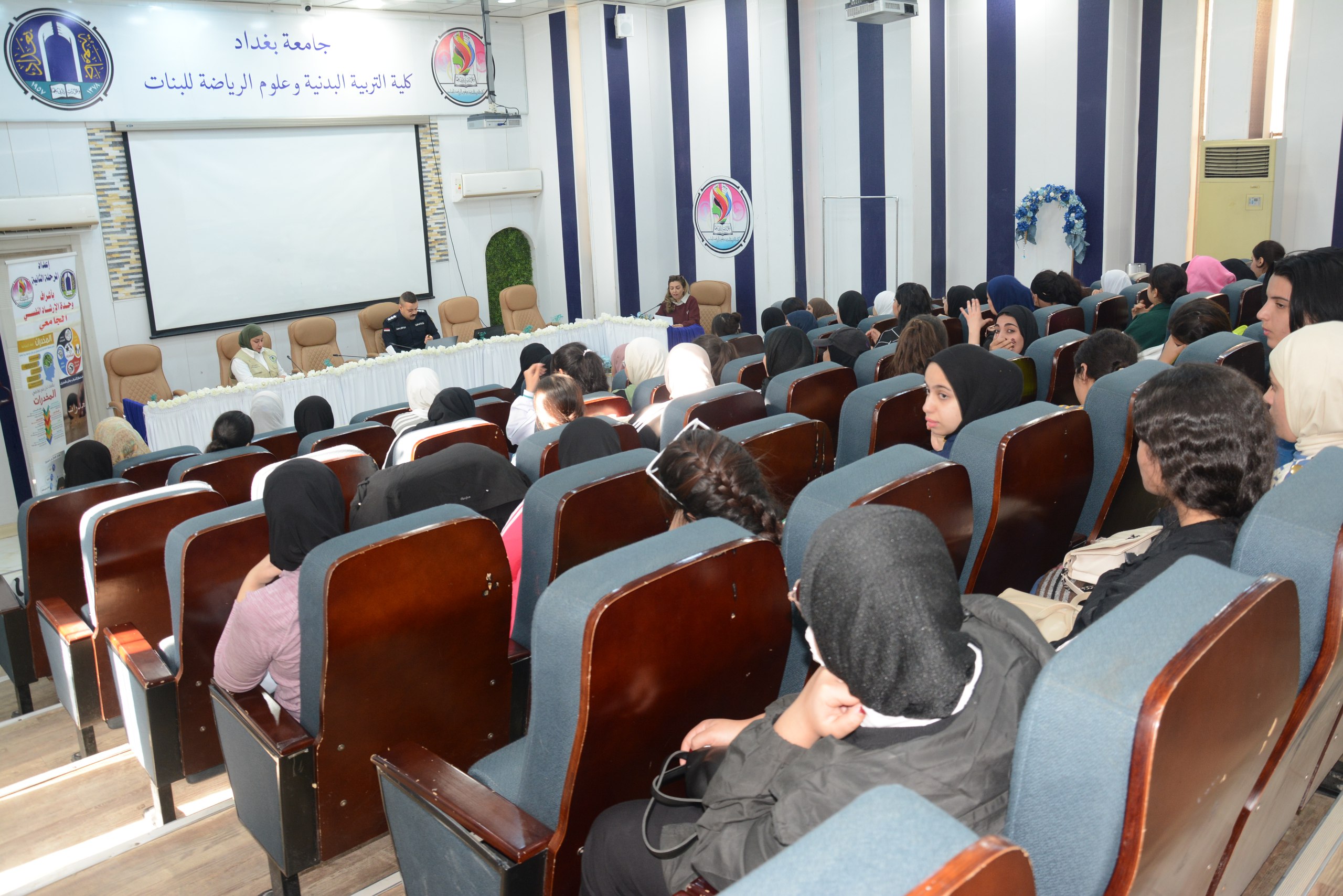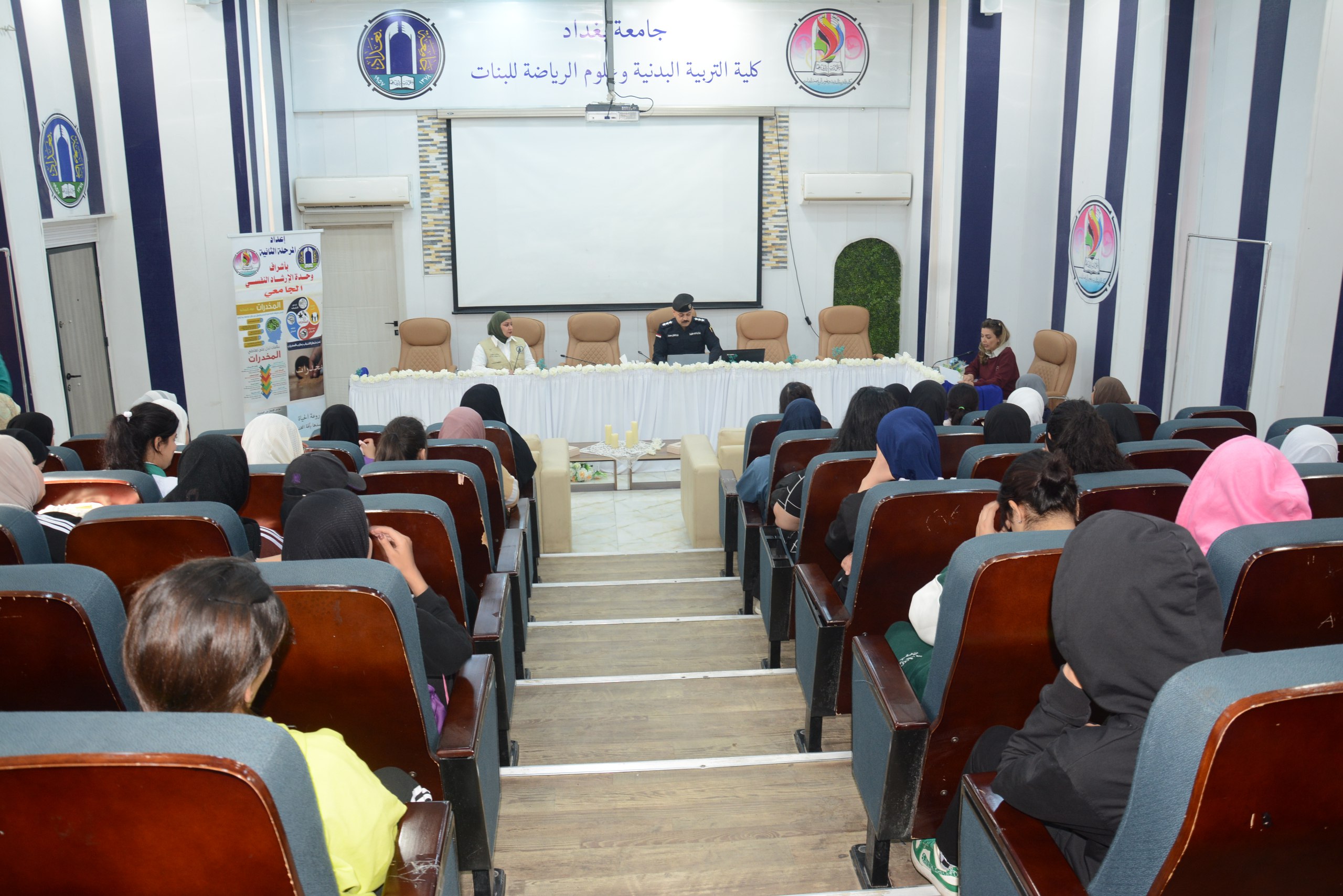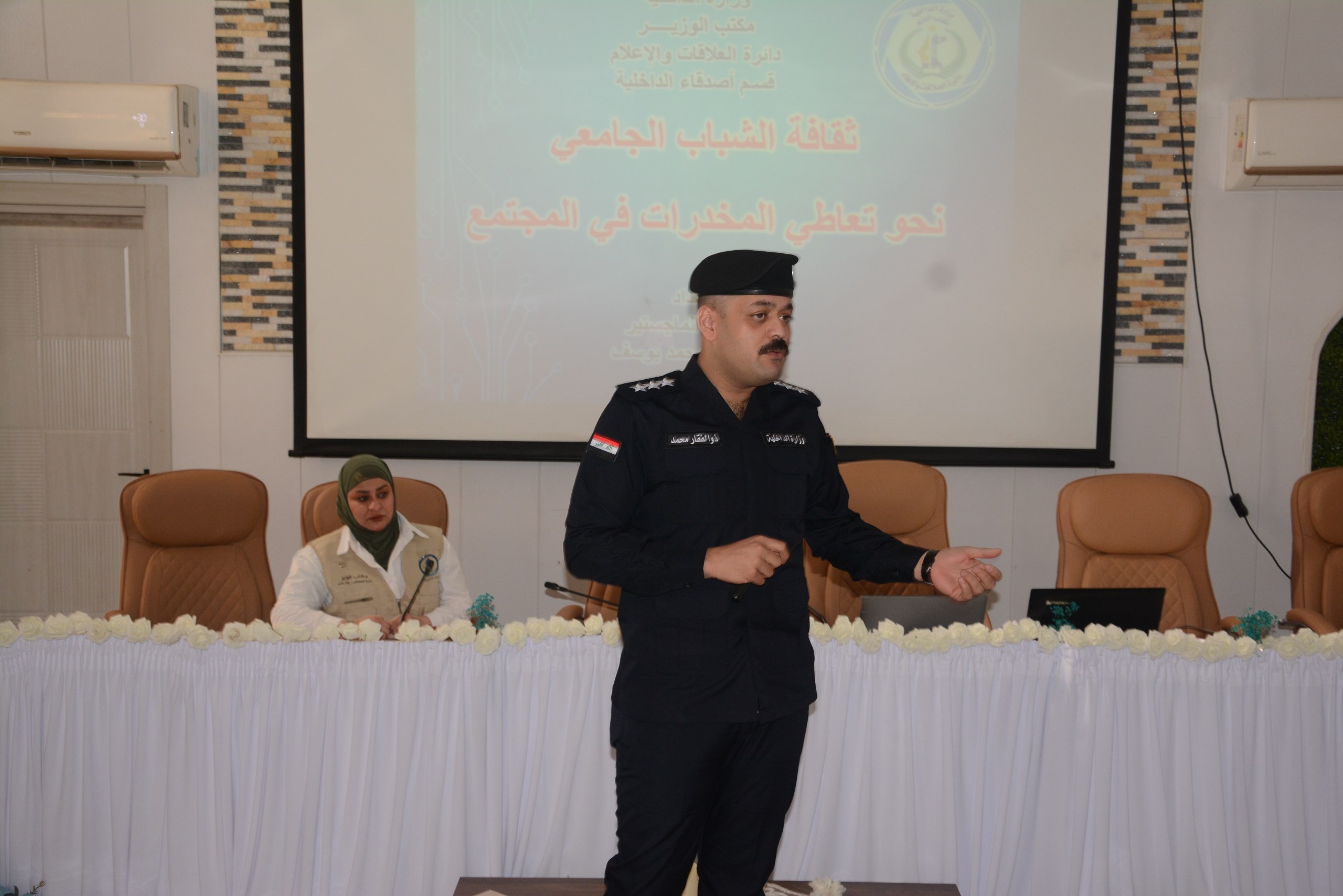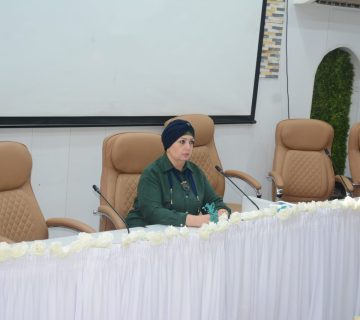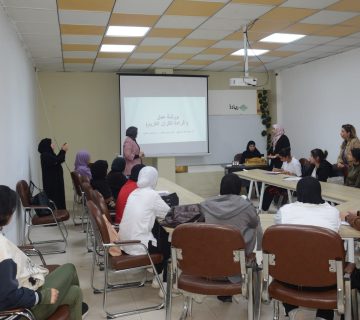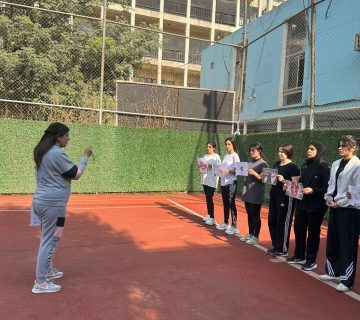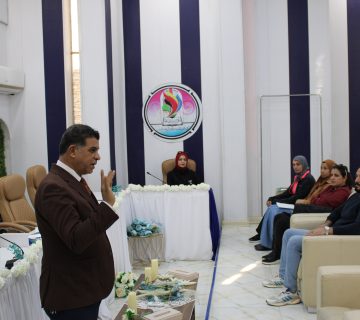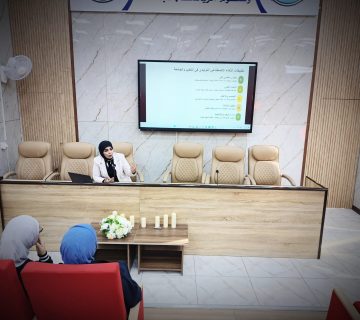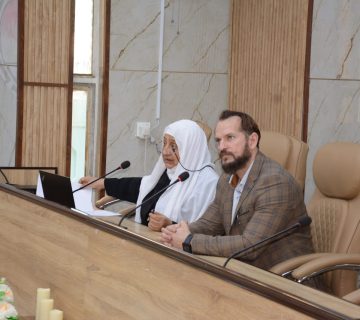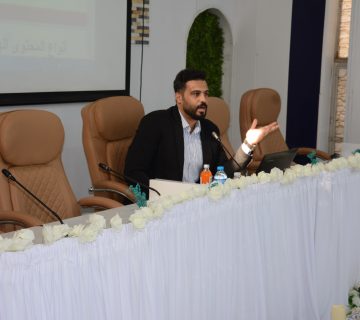
The Career Development and Employment Unit at the College of Physical Education and Sports Sciences for Women, University of Baghdad, hosted—under the patronage of Dean Prof. Dr. Fatima Abd Malih and under the supervision of the unit’s coordinator, Safia Ihsan Kamil—a delegation from the Ministry of Interior / Directorate of Relations and Media / Friends of the Interior Department to deliver an awareness workshop titled (University Youth Culture Toward Drug Use in Society). Captain Thu-al-Fiqar Mohammed Youssef presented the seminar.
During the workshop, he defined drugs as any plant-based or manufactured substance containing sedative, hypnotic, or narcotic elements that, when used for non-medical purposes, cause fatigue, lethargy, and loss of activity. Such substances also negatively impact the central nervous, respiratory, and circulatory systems, and lead to dependence, commonly known as “addiction.”
He further explained how victims are lured into using drugs and psychoactive substances by deceiving them into believing they are harmless medications, stimulants, energy boosters, or pain relievers—tools to forget worries and problems. He also outlined the main causes of drug use and addiction, including: associating with negative peers, feelings of emptiness, imitation, excess money, social stress and problems, staying up late to study, and low educational levels.
The lecturer warned of the serious harms drug users face, such as heart disorders, high blood pressure that may lead to arterial rupture, seizures following sudden withdrawal, brain inflammations that cause hallucinations or memory loss, liver cirrhosis, digestive disorders and loss of appetite, weakened immunity, and chronic headaches. He also highlighted the psychological and social effects, including aggressive behavior, difficulty quitting addiction, increased crime and delinquency, and moral and social decline.
He also referred to key legal provisions regarding drugs and psychoactive substances, particularly Law No. 50 of 2017. Article (27) stipulates the death penalty or life imprisonment for acts such as importing, transporting, or exporting drugs or psychoactive substances for trafficking outside legally permitted circumstances; producing or manufacturing such substances for trafficking; planting or trading seeds of plants that produce narcotic substances in violation of the law. He also noted Articles (28) and (32), which outline penalties for drug use.
At the conclusion of the workshop, several recommendations were presented, including: utilizing academic expertise in Iraqi universities and institutes to develop drug-detection devices; activating the role of social control institutions (family, school, places of worship, tribes, and civil society organizations) to support state efforts in combating this threat; and strengthening the role of Iraqi media in spreading awareness messages about the dangers of drug use and psychoactive substances.
The Career Development and Employment Unit at the College of Physical Education and Sports Sciences for Women, University of Baghdad, hosted—under the patronage of Dean Prof. Dr. Fatima Abd Malih and under the supervision of the unit’s coordinator, Safia Ihsan Kamil—a delegation from the Ministry of Interior / Directorate of Relations and Media / Friends of the Interior Department to deliver an awareness workshop titled (University Youth Culture Toward Drug Use in Society). Captain Thu-al-Fiqar Mohammed Youssef presented the seminar.
During the workshop, he defined drugs as any plant-based or manufactured substance containing sedative, hypnotic, or narcotic elements that, when used for non-medical purposes, cause fatigue, lethargy, and loss of activity. Such substances also negatively impact the central nervous, respiratory, and circulatory systems, and lead to dependence, commonly known as “addiction.”
He further explained how victims are lured into using drugs and psychoactive substances by deceiving them into believing they are harmless medications, stimulants, energy boosters, or pain relievers—tools to forget worries and problems. He also outlined the main causes of drug use and addiction, including: associating with negative peers, feelings of emptiness, imitation, excess money, social stress and problems, staying up late to study, and low educational levels.
The lecturer warned of the serious harms drug users face, such as heart disorders, high blood pressure that may lead to arterial rupture, seizures following sudden withdrawal, brain inflammations that cause hallucinations or memory loss, liver cirrhosis, digestive disorders and loss of appetite, weakened immunity, and chronic headaches. He also highlighted the psychological and social effects, including aggressive behavior, difficulty quitting addiction, increased crime and delinquency, and moral and social decline.
He also referred to key legal provisions regarding drugs and psychoactive substances, particularly Law No. 50 of 2017. Article (27) stipulates the death penalty or life imprisonment for acts such as importing, transporting, or exporting drugs or psychoactive substances for trafficking outside legally permitted circumstances; producing or manufacturing such substances for trafficking; planting or trading seeds of plants that produce narcotic substances in violation of the law. He also noted Articles (28) and (32), which outline penalties for drug use.
At the conclusion of the workshop, several recommendations were presented, including: utilizing academic expertise in Iraqi universities and institutes to develop drug-detection devices; activating the role of social control institutions (family, school, places of worship, tribes, and civil society organizations) to support state efforts in combating this threat; and strengthening the role of Iraqi media in spreading awareness messages about the dangers of drug use and psychoactive substances.