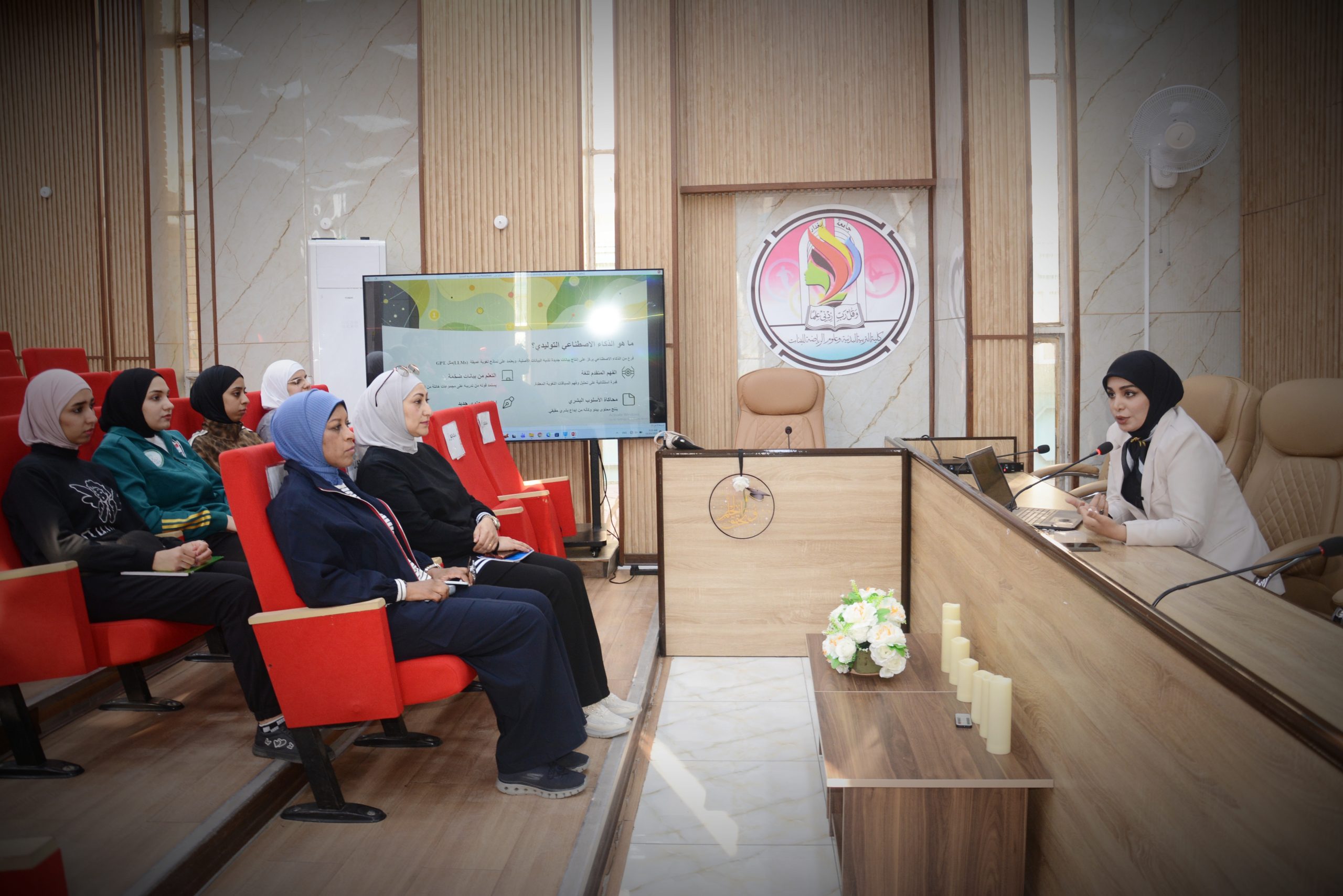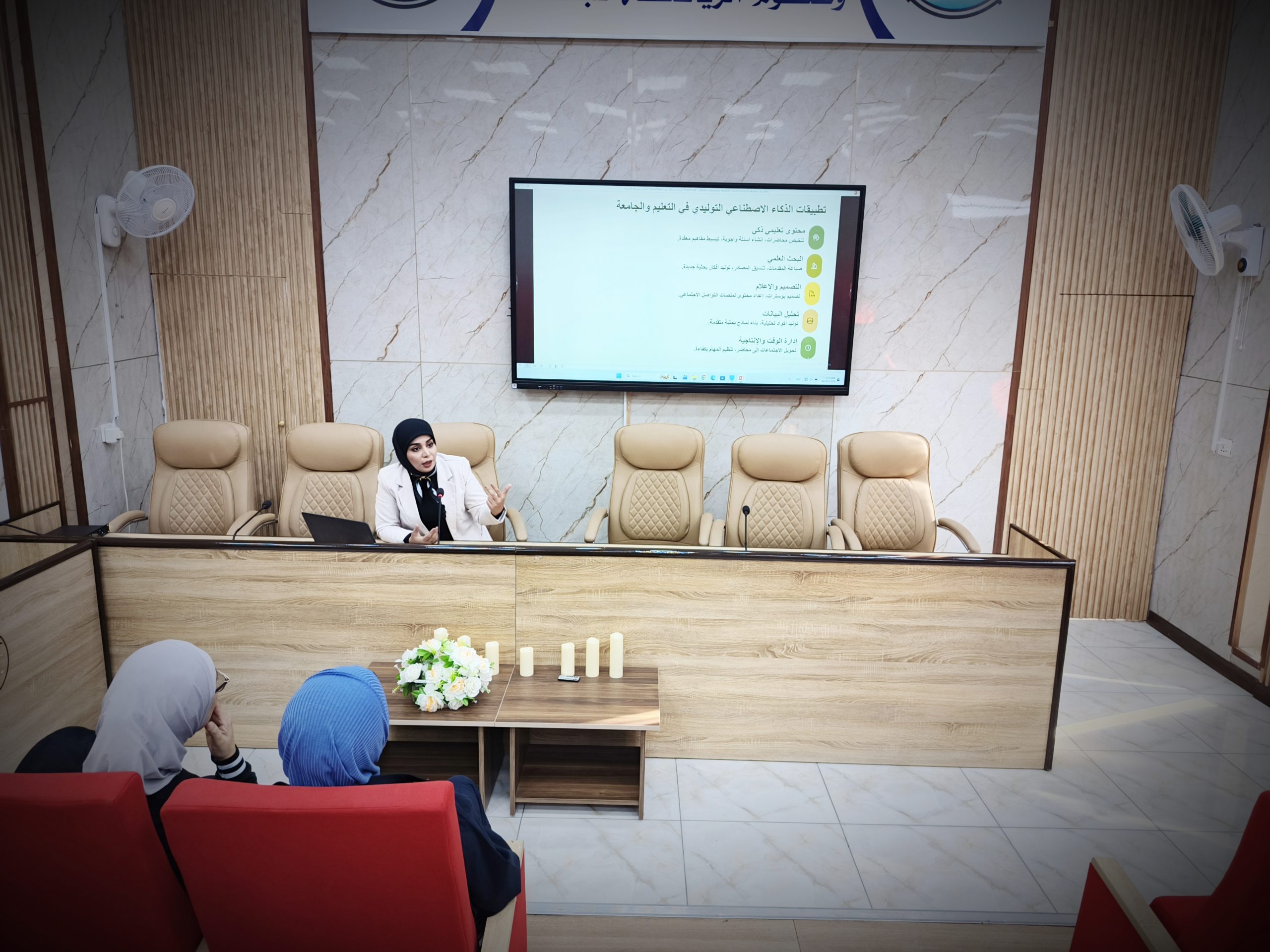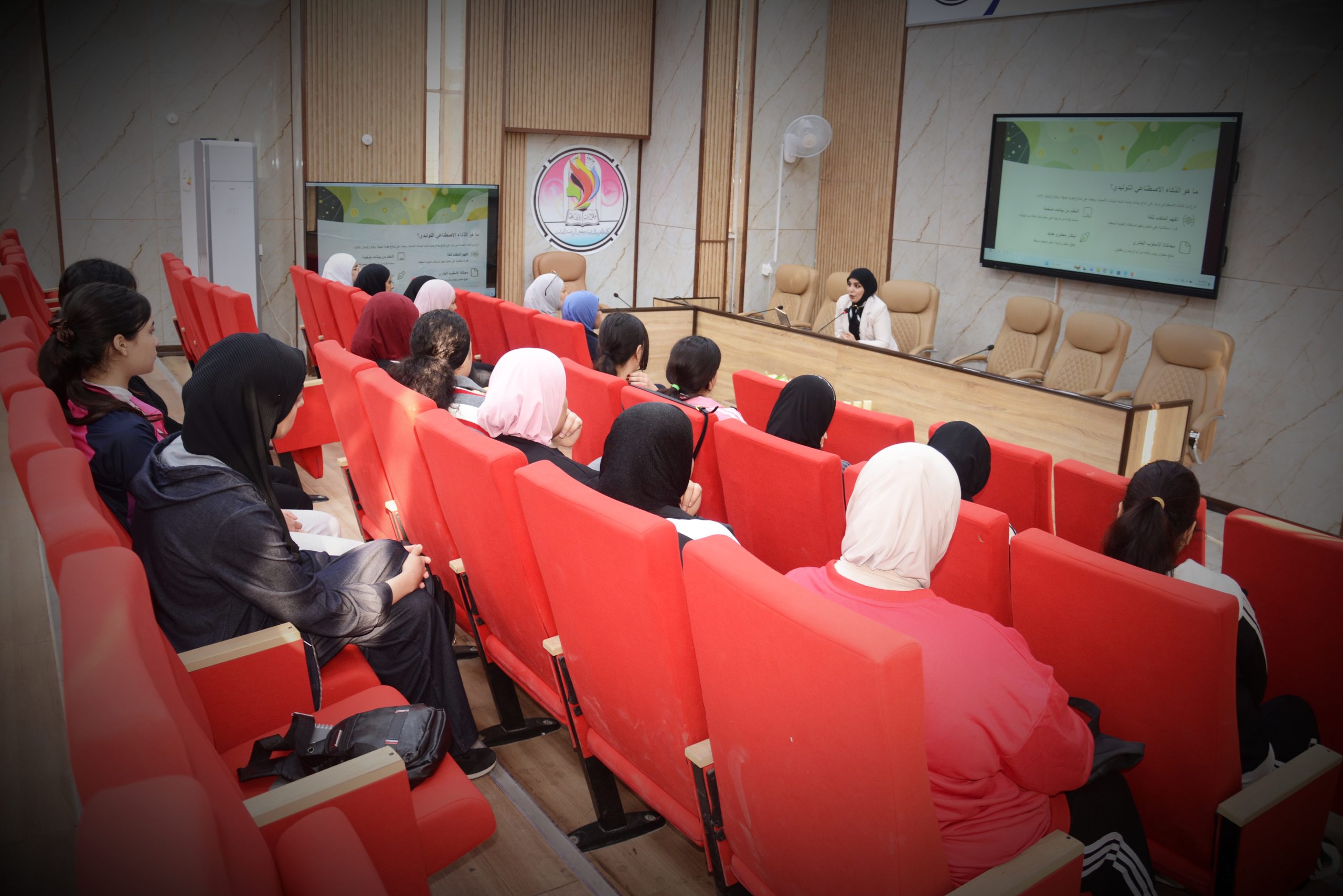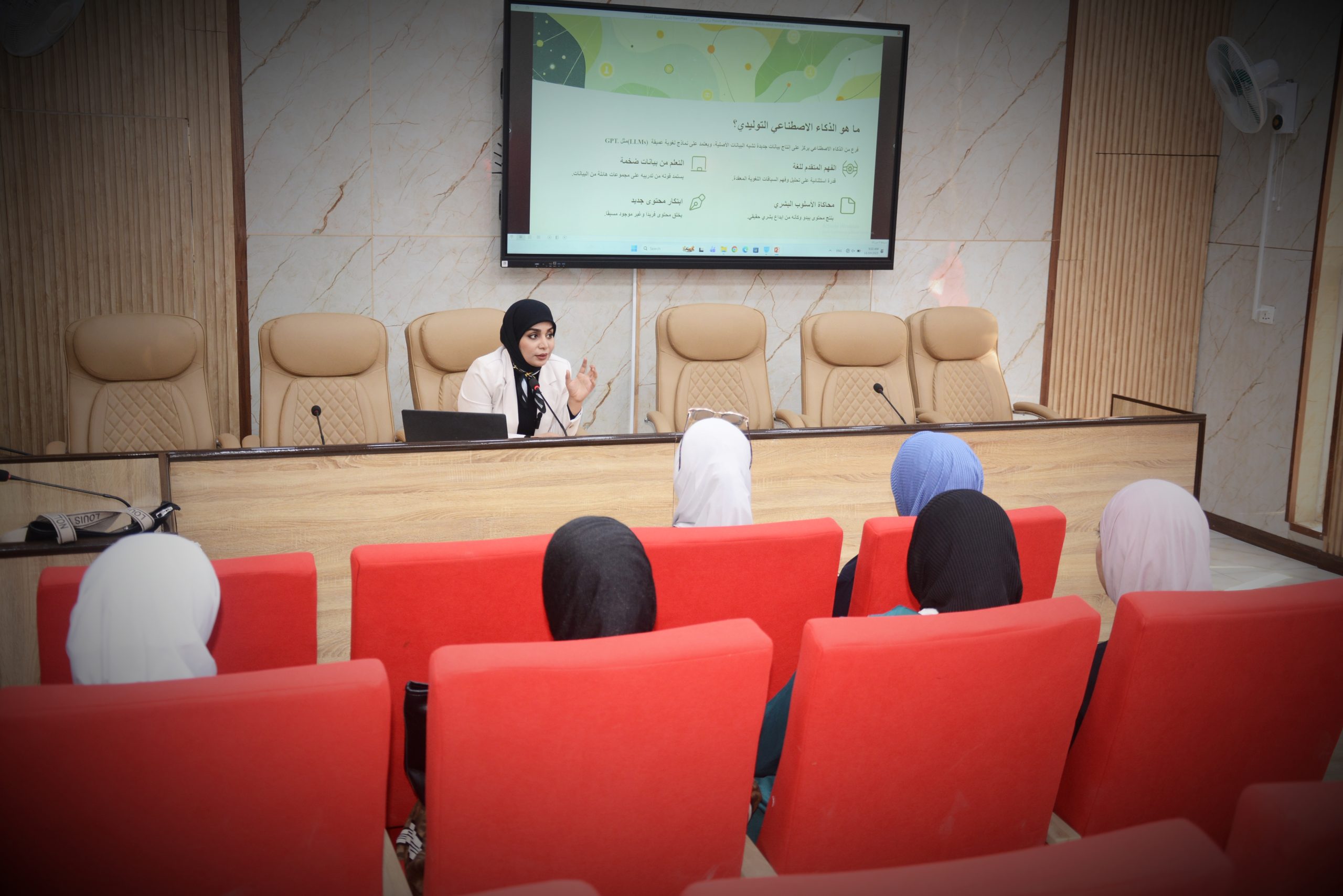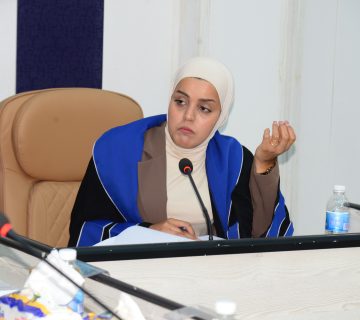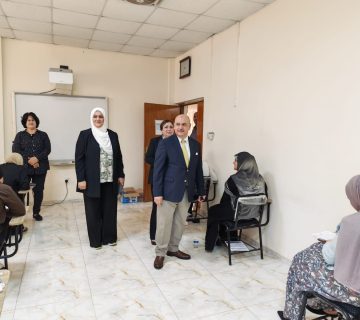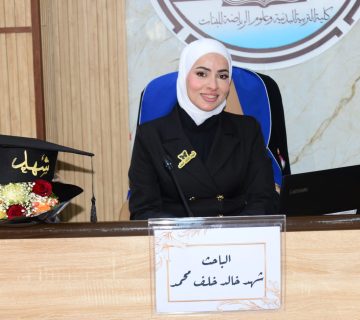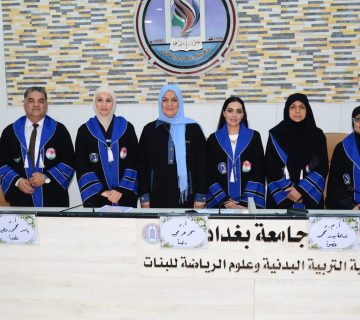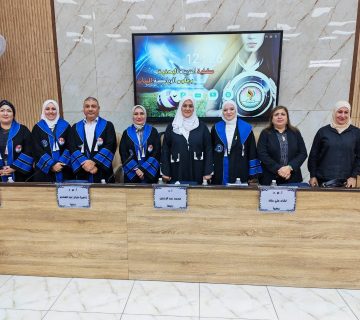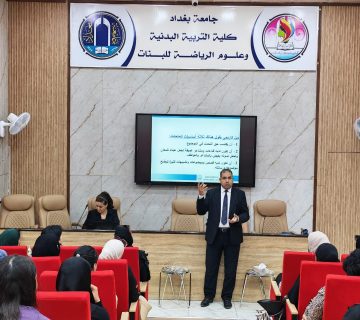
The Scientific Affairs Unit at the College of Physical Education and Sport Sciences for Women, University of Baghdad, organized a scientific workshop for undergraduate students titled (Generative Artificial Intelligence: Tools of a Creative Future). The workshop was presented by Ms. Riyam Abdul Kareem, the trainer and Head of the Information Technology Unit.
Ms. Riyam explained the concept of generative artificial intelligence, noting that it is a branch of AI that focuses on generating new data that resembles the original data. It relies on advanced language models, such as LLMs and GPT-like models. She clarified how this technology operates: it takes input data, analyzes it, and generates new content, including text, images, videos, audio, and programming code. She added that its applications extend to intelligent educational content creation, contributing to scientific research, design, and media, as well as to data analysis, and enhancing time management and productivity.
She also highlighted key risks associated with its use, including the spread of misinformation, privacy concerns, plagiarism, excessive reliance on AI, and media falsification. At the same time, she emphasized the importance of addressing ethical challenges, including respecting copyright, citing sources, avoiding misuse or misleading content, protecting sensitive data, and ensuring accuracy through verification and auditing.
Ms. Riyam concluded the workshop by reaffirming that artificial intelligence is not a substitute for humans, but rather an effective tool that supports creativity and helps reduce the time required to complete tasks.
It is worth noting that this workshop aligns with Sustainable Development Goal 4 (Quality Education).
The Scientific Affairs Unit at the College of Physical Education and Sport Sciences for Women, University of Baghdad, organized a scientific workshop for undergraduate students titled (Generative Artificial Intelligence: Tools of a Creative Future). The workshop was presented by Ms. Riyam Abdul Kareem, the trainer and Head of the Information Technology Unit.
Ms. Riyam explained the concept of generative artificial intelligence, noting that it is a branch of AI that focuses on generating new data that resembles the original data. It relies on advanced language models, such as LLMs and GPT-like models. She clarified how this technology operates: it takes input data, analyzes it, and generates new content, including text, images, videos, audio, and programming code. She added that its applications extend to intelligent educational content creation, contributing to scientific research, design, and media, as well as to data analysis, and enhancing time management and productivity.
She also highlighted key risks associated with its use, including the spread of misinformation, privacy concerns, plagiarism, excessive reliance on AI, and media falsification. At the same time, she emphasized the importance of addressing ethical challenges, including respecting copyright, citing sources, avoiding misuse or misleading content, protecting sensitive data, and ensuring accuracy through verification and auditing.
Ms. Riyam concluded the workshop by reaffirming that artificial intelligence is not a substitute for humans, but rather an effective tool that supports creativity and helps reduce the time required to complete tasks.
It is worth noting that this workshop aligns with Sustainable Development Goal 4 (Quality Education).