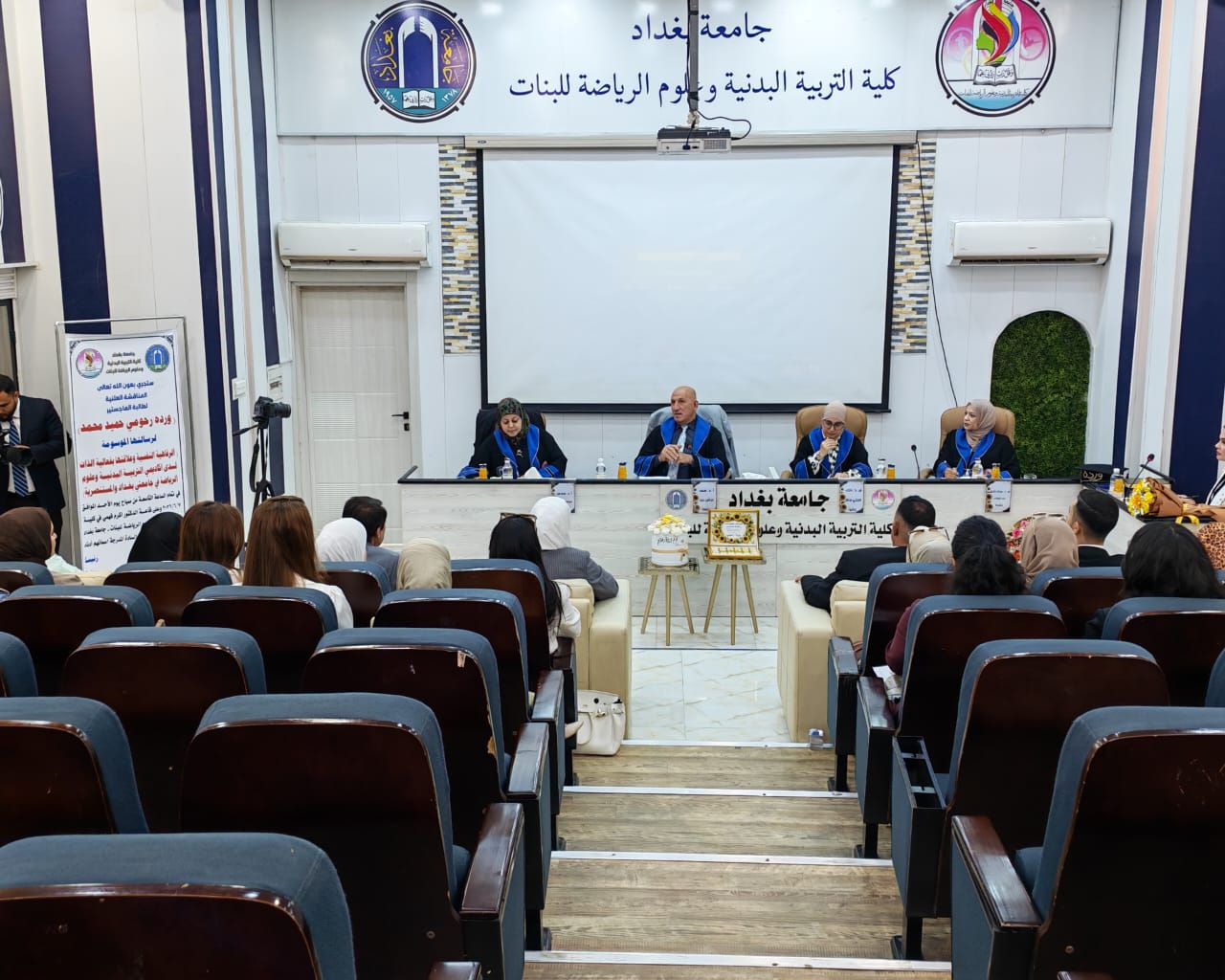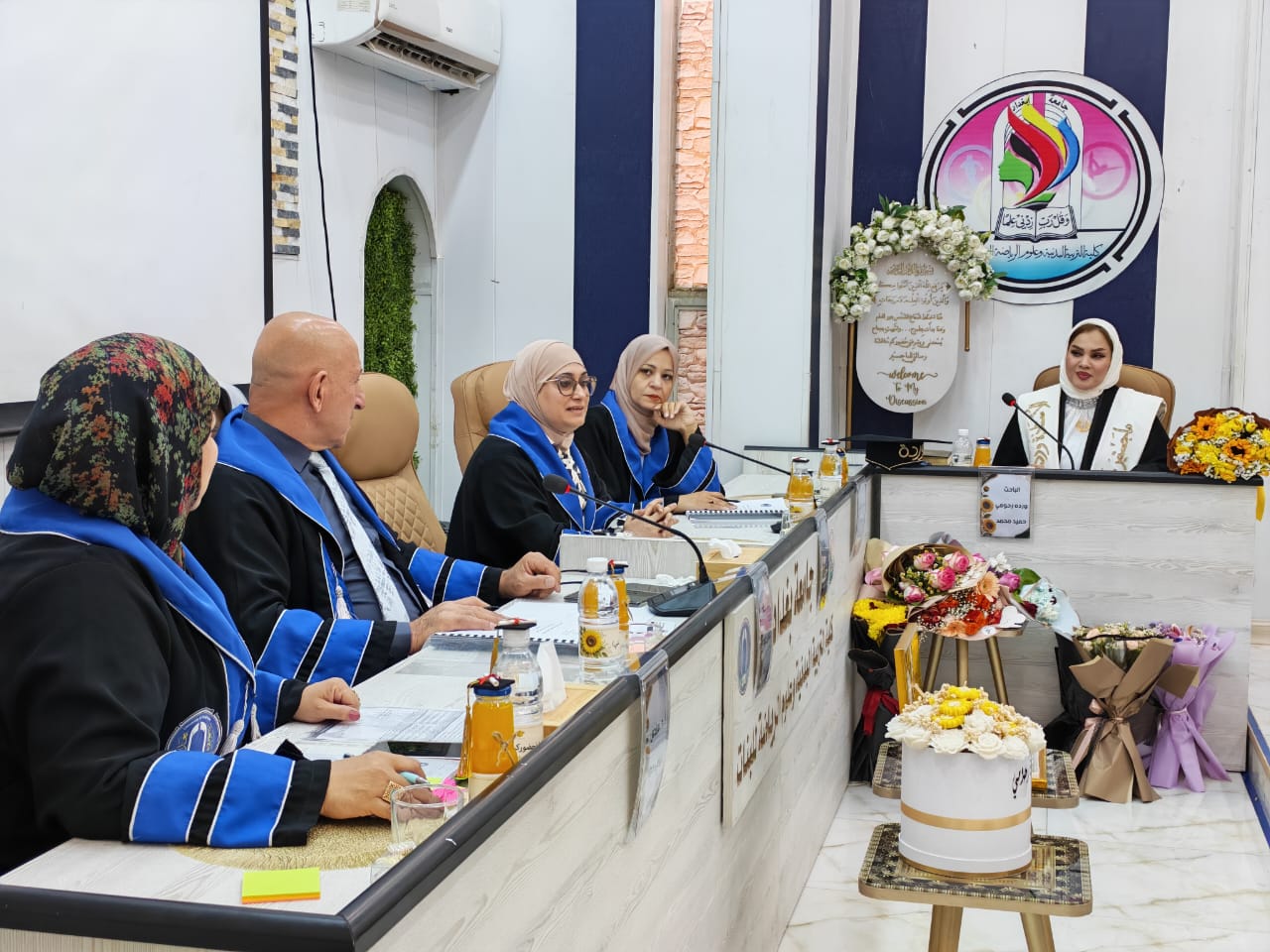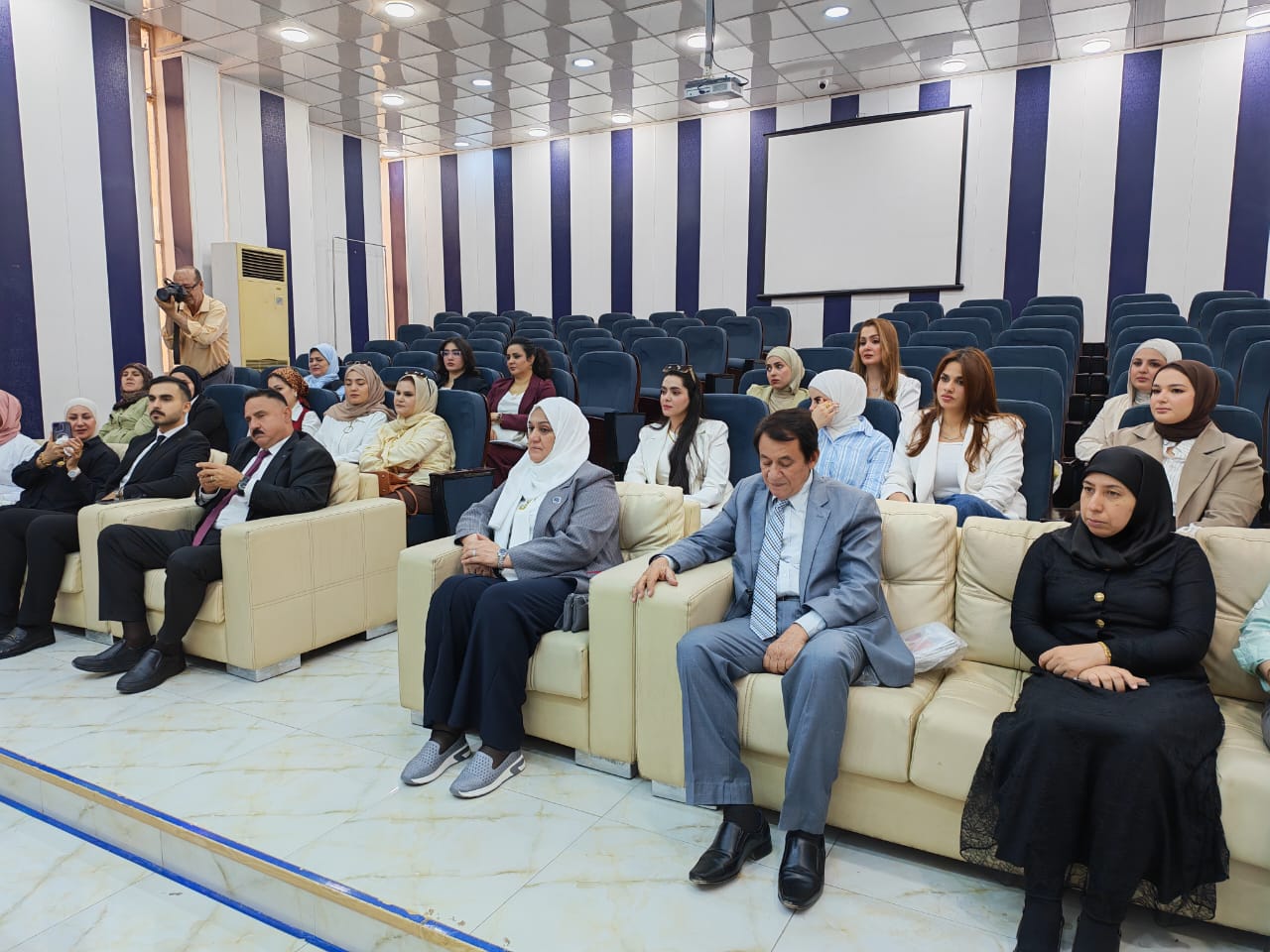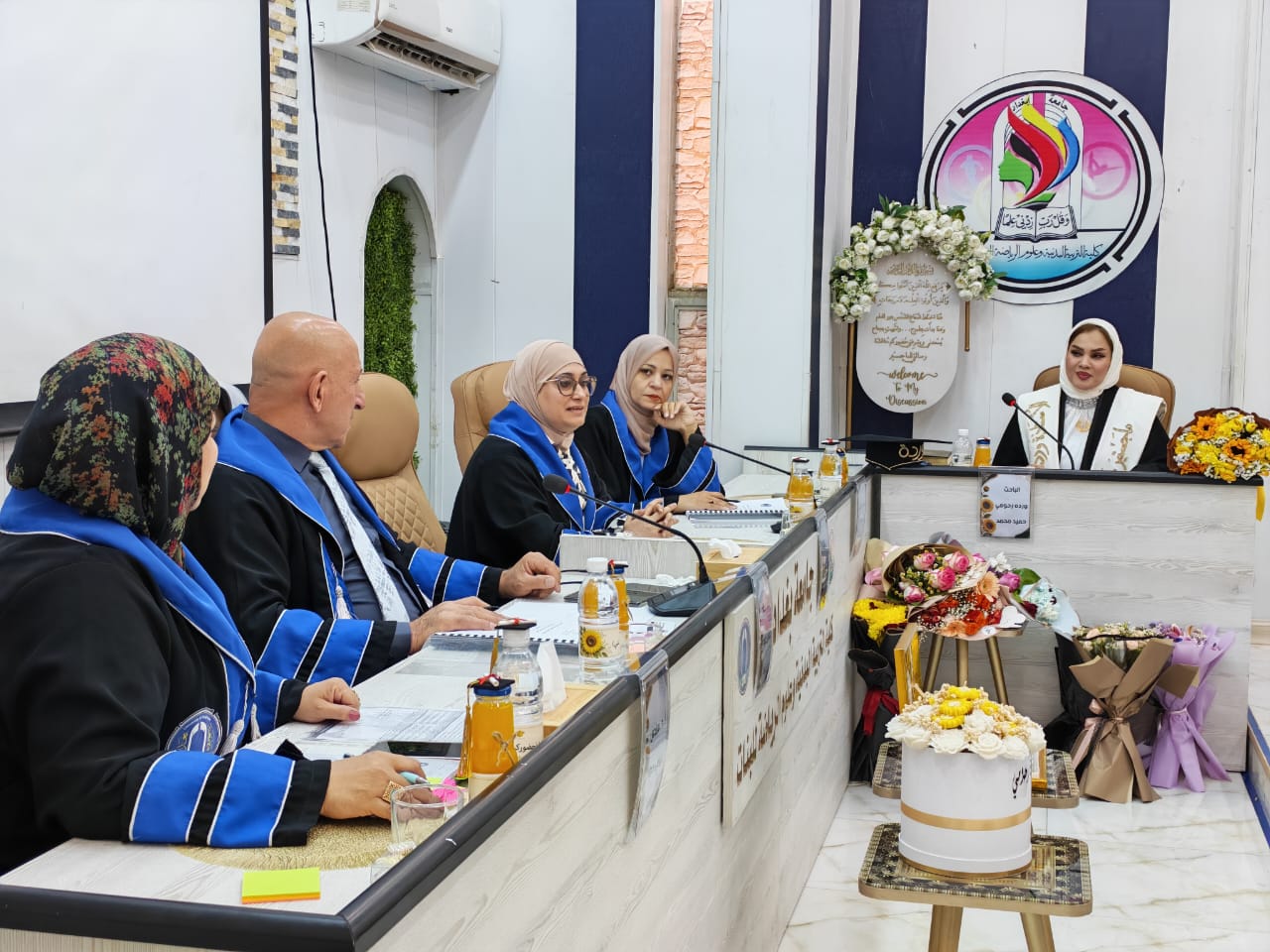
A Master’s thesis titled (Psychological Well-Being and Its Relationship with Self-Efficacy Among Physical Education and Sports Sciences Academics at the Universities of Baghdad and Al-Mustansiriya) by the student (Warda Rahoumi Hamid Muhammad) was discussed at the College of Physical Education and Sports Sciences for Girls, University of Baghdad.
The examination committee comprised Professor Dr. Saad Abbas Abid from the University of Samarra as Chair, Lecturer Dr. Baidaa Tariq Abdul Wahid as Supervisor, Professor Dr. Sundus Musa Jawad as Member, and Lecturer Dr. Nazik Subhi Matar as Member.
The research aimed to construct a psychological well-being scale and identify its level among physical education and sports sciences academics at the universities of Baghdad and Al-Mustansiriya, develop a self-efficacy scale and identify its level among the same cohort, and determine the nature of the relationship between psychological well-being and self-efficacy among these academics.
The study concluded that both the psychological well-being and self-efficacy scales are valid for their intended purposes, meet the acceptance criteria for measurement tools in sports psychology, and are suitable for the direct measurement of these two psychometric phenomena among physical education and sports sciences academics at the universities of Baghdad and Al-Mustansiriya. Furthermore, the results indicated that the academics possess the required level of psychological well-being, with varying levels across its dimensions—headed by self-acceptance and followed lastly by environmental mastery. They also possess the required level of self-efficacy, and there is a statistically significant, positive direct relationship between psychological well-being and self-efficacy among the academics.
The study recommended the necessity of increasing interest in periodic psychological measurement of both psychological well-being and self-efficacy among physical education and sports sciences academics at the universities of Baghdad and Al-Mustansiriya by adopting the two scales developed in this research. It also emphasized that continuing education courses in the colleges and departments of physical education and sports sciences at both universities should adopt psychological well-being programs due to their positive role in supporting academics’ self-efficacy.
This study achieves the fourth goal of the Sustainable Development Goals (SDGs), which is Quality Education.
A Master’s thesis titled (Psychological Well-Being and Its Relationship with Self-Efficacy Among Physical Education and Sports Sciences Academics at the Universities of Baghdad and Al-Mustansiriya) by the student (Warda Rahoumi Hamid Muhammad) was discussed at the College of Physical Education and Sports Sciences for Girls, University of Baghdad.
The examination committee comprised Professor Dr. Saad Abbas Abid from the University of Samarra as Chair, Lecturer Dr. Baidaa Tariq Abdul Wahid as Supervisor, Professor Dr. Sundus Musa Jawad as Member, and Lecturer Dr. Nazik Subhi Matar as Member.
The research aimed to construct a psychological well-being scale and identify its level among physical education and sports sciences academics at the universities of Baghdad and Al-Mustansiriya, develop a self-efficacy scale and identify its level among the same cohort, and determine the nature of the relationship between psychological well-being and self-efficacy among these academics.
The study concluded that both the psychological well-being and self-efficacy scales are valid for their intended purposes, meet the acceptance criteria for measurement tools in sports psychology, and are suitable for the direct measurement of these two psychometric phenomena among physical education and sports sciences academics at the universities of Baghdad and Al-Mustansiriya. Furthermore, the results indicated that the academics possess the required level of psychological well-being, with varying levels across its dimensions—headed by self-acceptance and followed lastly by environmental mastery. They also possess the required level of self-efficacy, and there is a statistically significant, positive direct relationship between psychological well-being and self-efficacy among the academics.
The study recommended the necessity of increasing interest in periodic psychological measurement of both psychological well-being and self-efficacy among physical education and sports sciences academics at the universities of Baghdad and Al-Mustansiriya by adopting the two scales developed in this research. It also emphasized that continuing education courses in the colleges and departments of physical education and sports sciences at both universities should adopt psychological well-being programs due to their positive role in supporting academics’ self-efficacy.
This study achieves the fourth goal of the Sustainable Development Goals (SDGs), which is Quality Education.