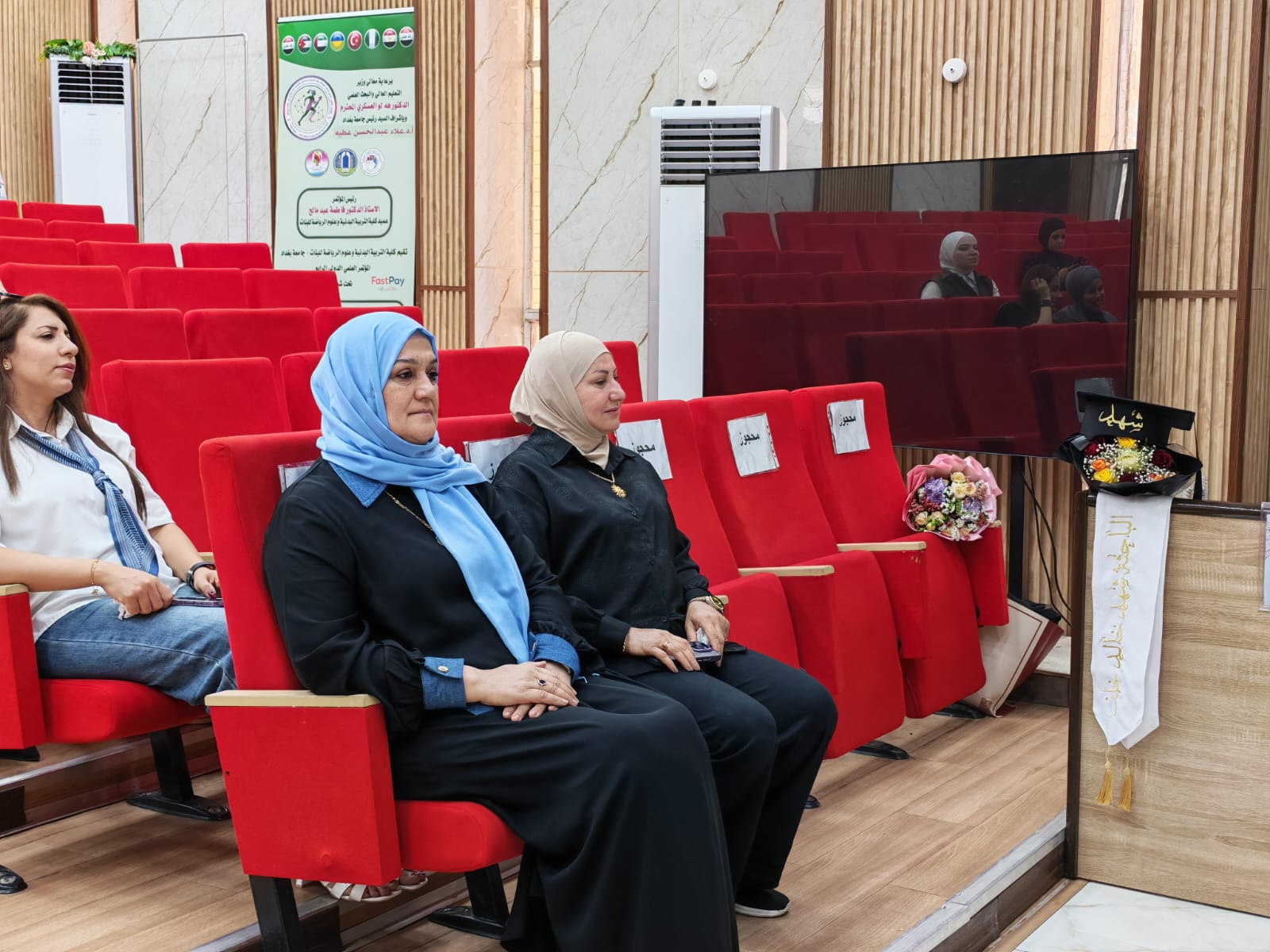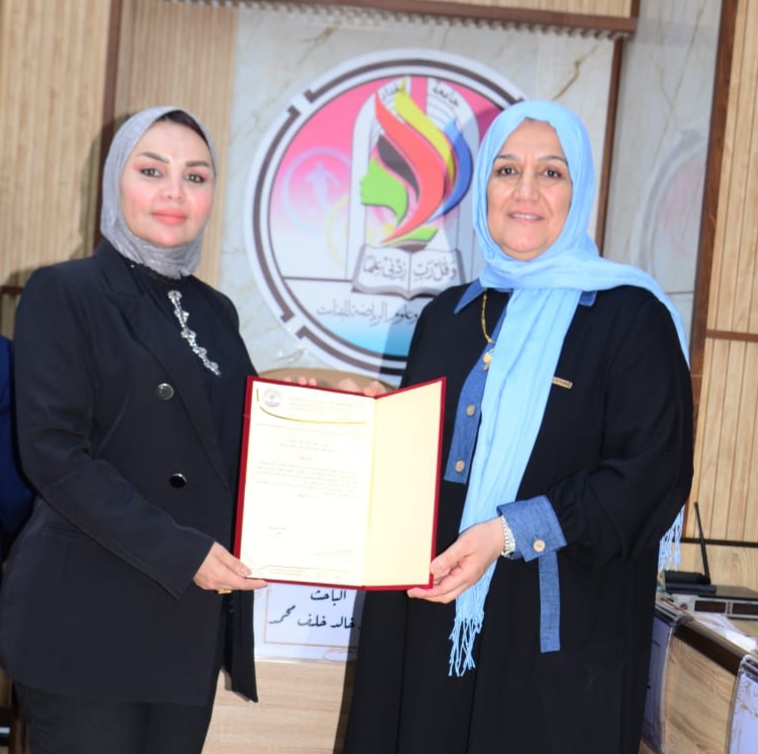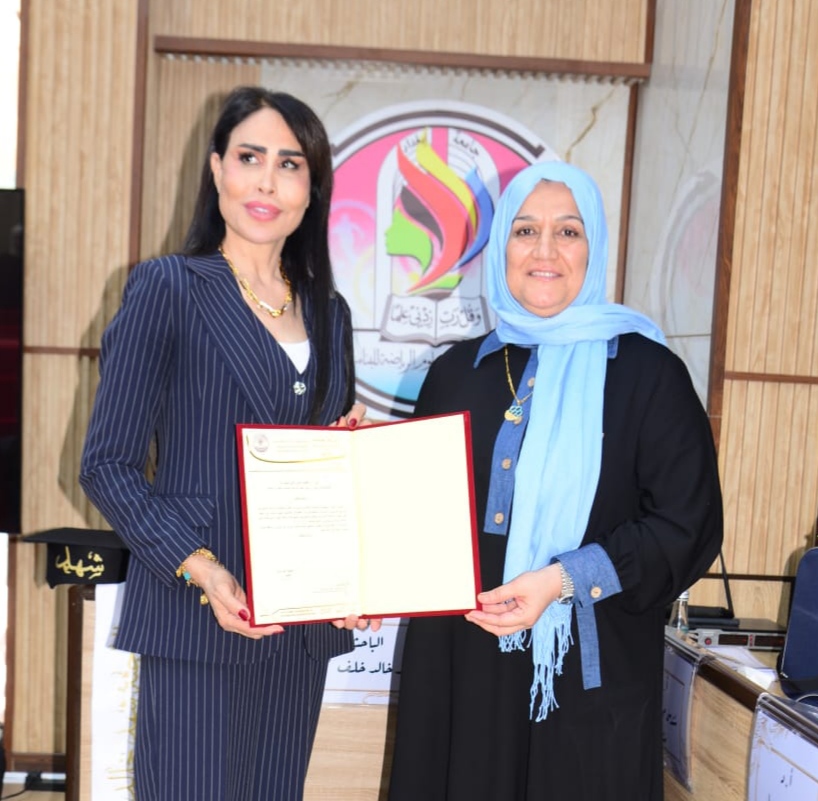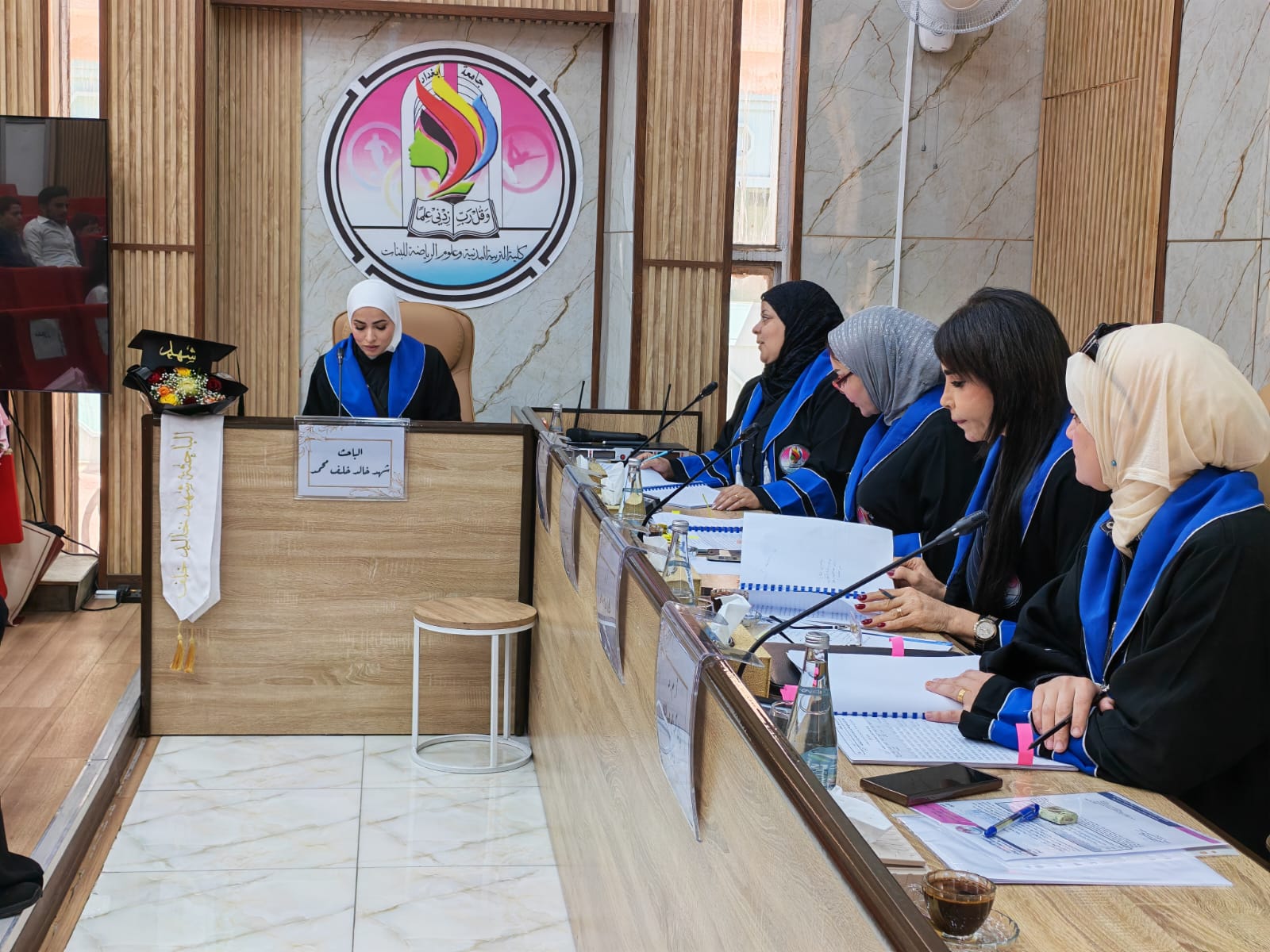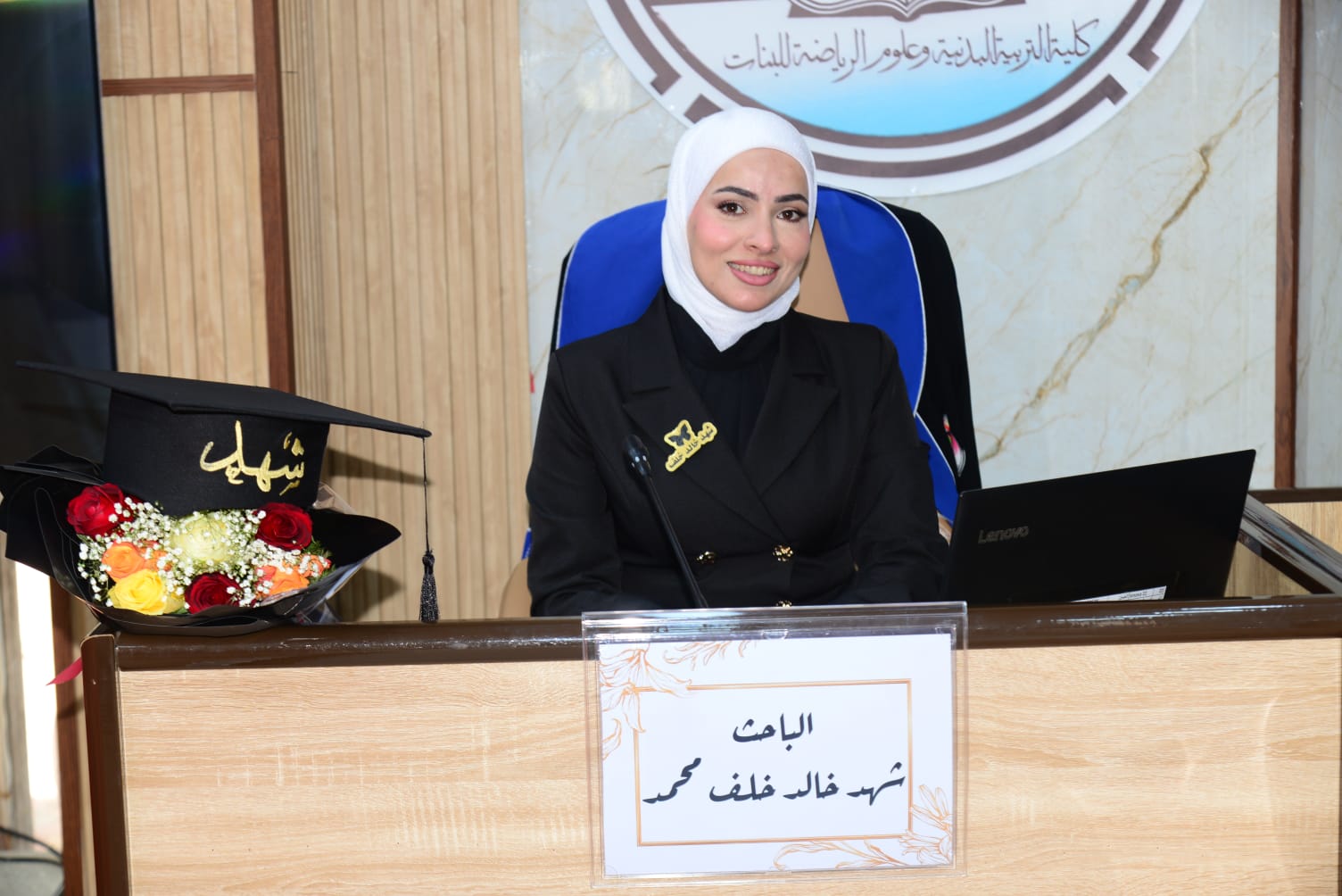
A Master’s thesis titled “Soft Skills and Their Relationship to Managing Open Tournaments for Tennis Umpires from the Perspective of the Match Supervising Committee” was discussed at the College of Physical Education and Sports Sciences for Girls, University of Baghdad. The thesis was submitted by the researcher, Shahad Khalid Khalaf Muhammad.
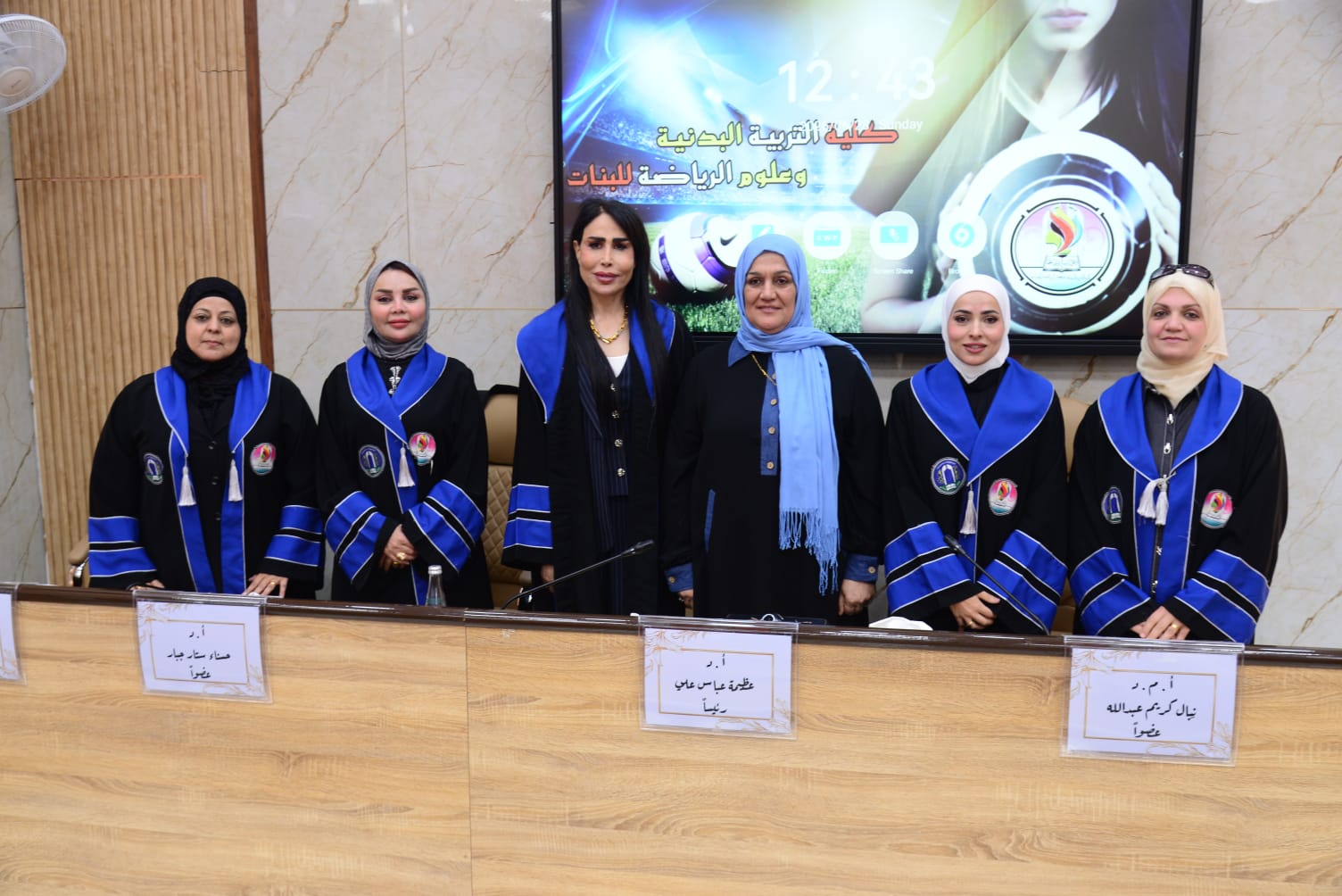
The discussion committee comprised the following members: Prof. Dr. Azima Abbas Ali (Salahaddin University-Erbil) as the external Chair, Prof. Dr. Hasnaa Sattar Jabbar as a member, Assoc. Prof. Dr. Nibal Karim Abdullah as a member, and Prof. Dr. Sundus Mousa Jawad as a member and supervisor.
This study aimed to identify soft skills and their relationship to managing open tournaments for tennis umpires from the perspective of the match supervising committee. The research stems from the significance of sports officiating as one of the fundamental pillars for the success of athletic tournaments, particularly in tennis, which demands high precision in rules application and rapid decision-making.
To achieve the study’s objectives and address the nature of the research problem, the researcher adopted a descriptive survey methodology. The research population consisted of all ninety-five (95) certified tennis umpires registered with the Iraqi Central Tennis Federation. Given the population size, a comprehensive census method was utilized, incorporating the entire population as the research sample.
The study concluded that soft skills constitute a primary factor influencing the success of sports umpires. Furthermore, the development of these skills should be an integral component of training programs for tennis umpires, owing to their direct impact on enhancing officiating quality and maintaining discipline within open tournaments.
Based on these findings, the researcher recommended the necessity of implementing specialized training programs designed to develop umpires’ soft skills and integrating these skills into officiating performance evaluation criteria. Additionally, the study suggested utilizing these insights to enhance umpire selection mechanisms and elevate their efficiency in accordance with the demands of modern tournaments.
This study aligns with the fourth goal of the Sustainable Development Goals (SDGs), which focuses on Quality Education.
A Master’s thesis titled “Soft Skills and Their Relationship to Managing Open Tournaments for Tennis Umpires from the Perspective of the Match Supervising Committee” was discussed at the College of Physical Education and Sports Sciences for Girls, University of Baghdad. The thesis was submitted by the researcher, Shahad Khalid Khalaf Muhammad.
The discussion committee comprised the following members: Prof. Dr. Azima Abbas Ali (Salahaddin University-Erbil) as the external Chair, Prof. Dr. Hasnaa Sattar Jabbar as a member, Assoc. Prof. Dr. Nibal Karim Abdullah as a member, and Prof. Dr. Sundus Mousa Jawad as a member and supervisor.
This study aimed to identify soft skills and their relationship to managing open tournaments for tennis umpires from the perspective of the match supervising committee. The research stems from the significance of sports officiating as one of the fundamental pillars for the success of athletic tournaments, particularly in tennis, which demands high precision in rules application and rapid decision-making.
To achieve the study’s objectives and address the nature of the research problem, the researcher adopted a descriptive survey methodology. The research population consisted of all ninety-five (95) certified tennis umpires registered with the Iraqi Central Tennis Federation. Given the population size, a comprehensive census method was utilized, incorporating the entire population as the research sample.
The study concluded that soft skills constitute a primary factor influencing the success of sports umpires. Furthermore, the development of these skills should be an integral component of training programs for tennis umpires, owing to their direct impact on enhancing officiating quality and maintaining discipline within open tournaments.
Based on these findings, the researcher recommended the necessity of implementing specialized training programs designed to develop umpires’ soft skills and integrating these skills into officiating performance evaluation criteria. Additionally, the study suggested utilizing these insights to enhance umpire selection mechanisms and elevate their efficiency in accordance with the demands of modern tournaments.
This study aligns with the fourth goal of the Sustainable Development Goals (SDGs), which focuses on Quality Education.