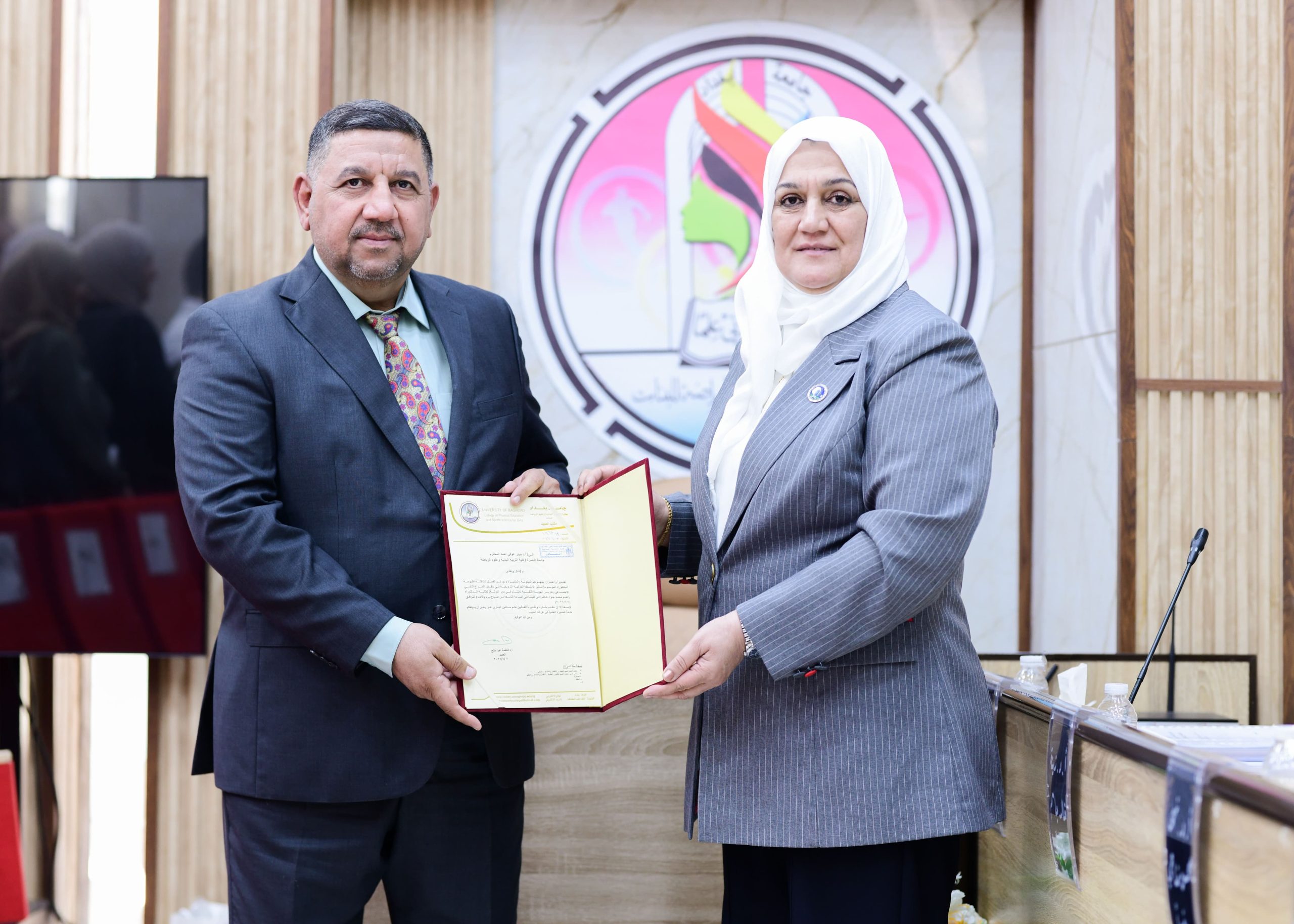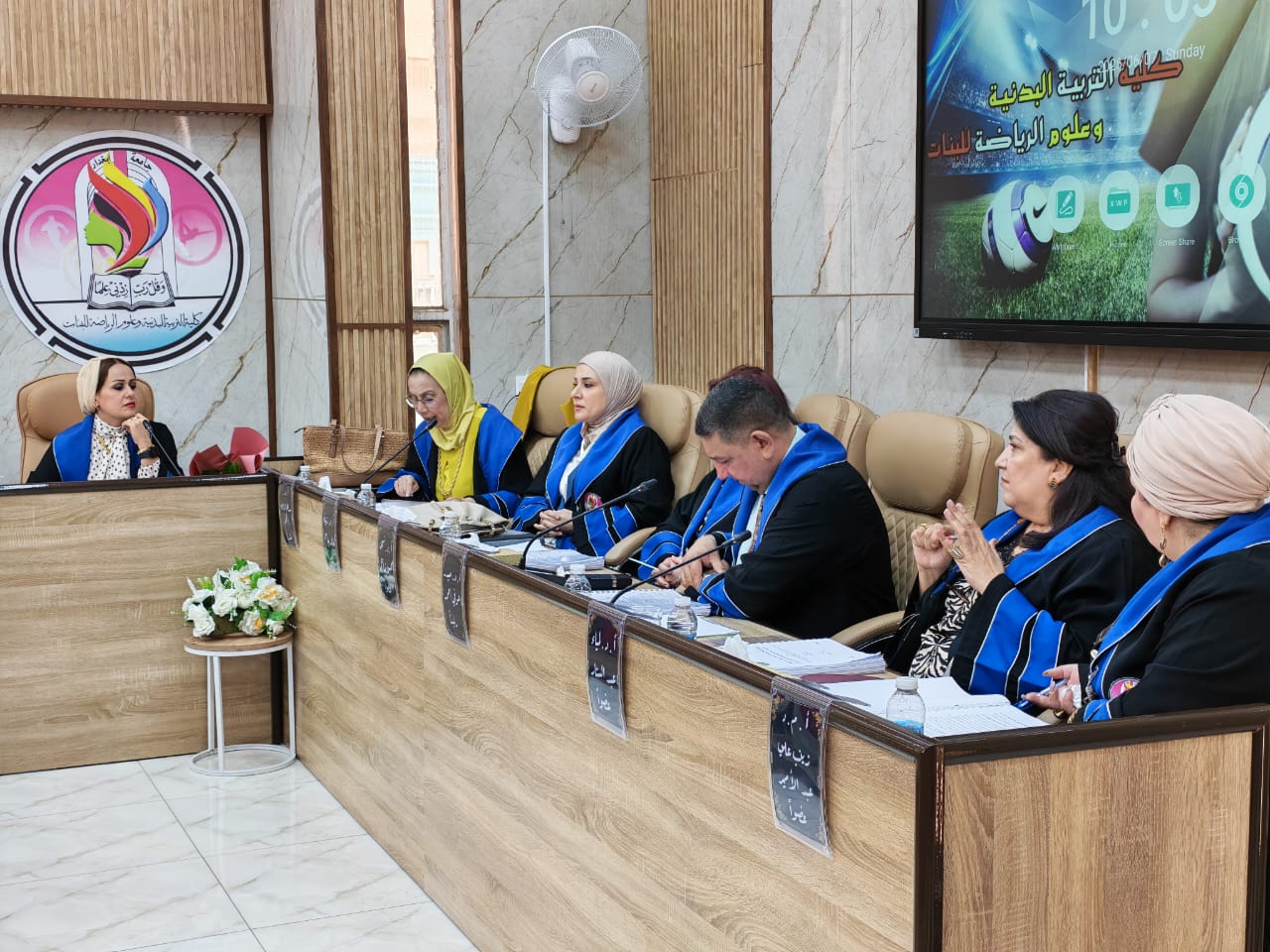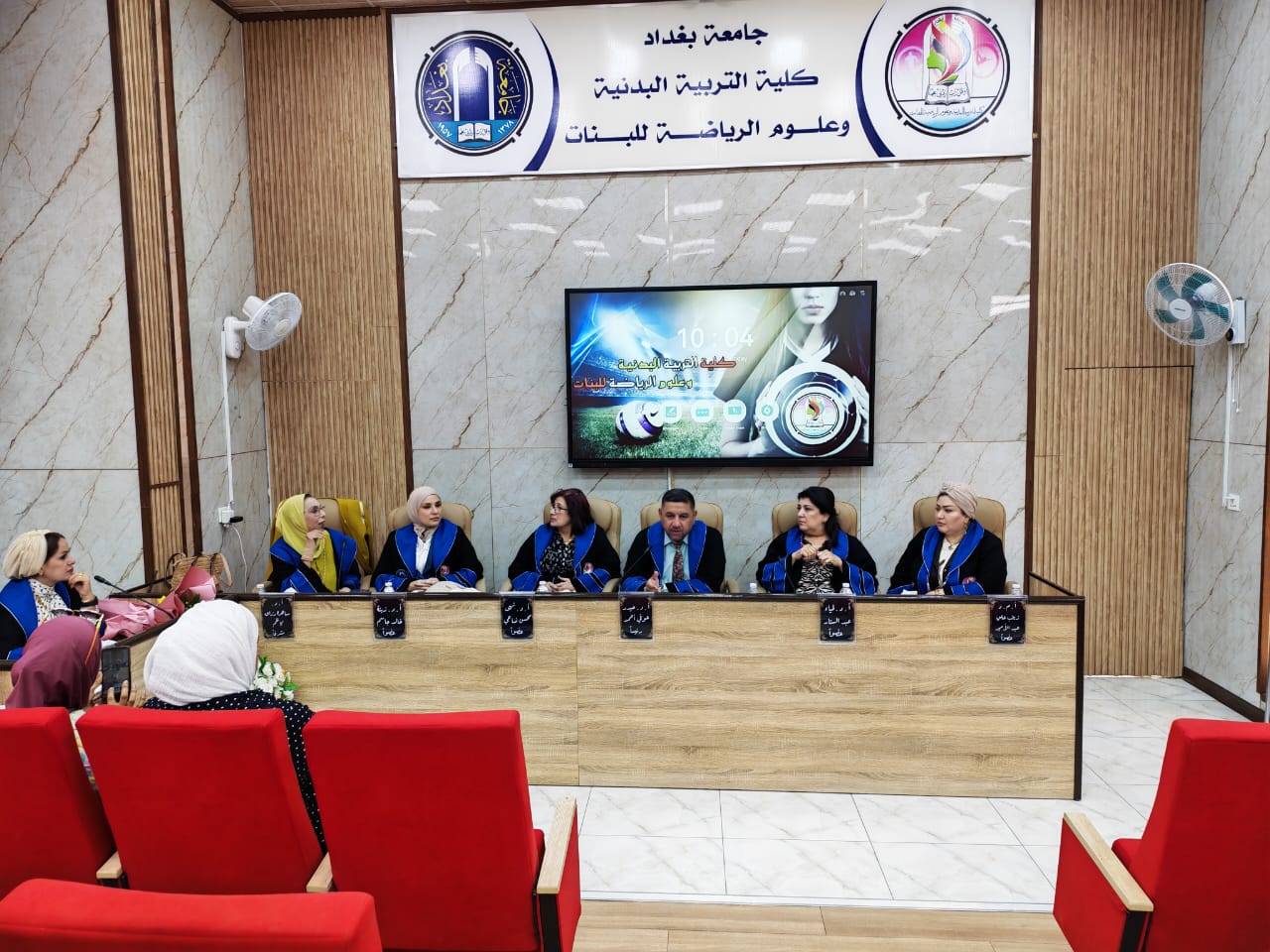
A doctoral dissertation titled (The Effect of Recreational Kinesthetic Activities on Reducing Psychosocial Conflict and Enhancing the Psychological Identity of Orphans in State Group Homes) by the student (Inaam Muhammad Jawad Kazim) was discussed at the College of Physical Education and Sports Sciences for Girls, University of Baghdad.
The examination committee comprised Professor Dr. Haider Awfi Ahmed from the University of Basra as Chair, Professor Dr. Sahira Razzaq Kazim as Supervisor, Professor Dr. Noha Muhsin Dhahi as Member, Professor Dr. Lamia Abdul Sattar Khalil as Member, Professor Dr. Zina Khalid Jassim as Member, and Assistant Professor Dr. Zainab Ali Abdul Amir as Member.
The study aimed to develop a program of recreational kinesthetic activities and implement it on a sample of orphans residing in state group homes. This was designed to identify the impact of these activities on reducing their level of psychosocial conflict and enhancing their psychological identity, measure the baseline levels of psychosocial conflict and psychological identity among these orphans, determine the relationship between them, and reveal the extent to which recreational activities contribute to improving both variables.
The study concluded that recreational kinesthetic activities contributed significantly to reducing psychosocial conflict levels among orphans by providing opportunities for emotional release, improving emotional regulation, and enhancing cooperation among peers. Additionally, the program positively influenced the formation of the orphans’ psychological identity, enhanced self-esteem, and developed their awareness of their worth and capabilities, which consequently increased their sense of self-efficacy and independence. It also fostered social belonging, provided a supportive environment for personal growth, and improved their ability to face daily challenges with confidence and competence.
The study recommended the necessity of integrating recreational kinesthetic activities into the daily programs of orphanages due to their vital role in supporting the mental and social health of this cohort. It also emphasized the importance of training supervisors and staff in care homes to utilize recreational activities in a scientific manner that develops social interaction and conflict-resolution skills among orphans. Furthermore, it stressed the need to reinforce programs that build a positive psychological identity for orphans, encouraging their participation in social and recreational activities that strengthen their sense of community belonging and help them build a balanced personality capable of facing life’s challenges.
This study achieves the fourth goal of the Sustainable Development Goals (SDGs), which is Quality Education.
A doctoral dissertation titled (The Effect of Recreational Kinesthetic Activities on Reducing Psychosocial Conflict and Enhancing the Psychological Identity of Orphans in State Group Homes) by the student (Inaam Muhammad Jawad Kazim) was discussed at the College of Physical Education and Sports Sciences for Girls, University of Baghdad.
The examination committee comprised Professor Dr. Haider Awfi Ahmed from the University of Basra as Chair, Professor Dr. Sahira Razzaq Kazim as Supervisor, Professor Dr. Noha Muhsin Dhahi as Member, Professor Dr. Lamia Abdul Sattar Khalil as Member, Professor Dr. Zina Khalid Jassim as Member, and Assistant Professor Dr. Zainab Ali Abdul Amir as Member.
The study aimed to develop a program of recreational kinesthetic activities and implement it on a sample of orphans residing in state group homes. This was designed to identify the impact of these activities on reducing their level of psychosocial conflict and enhancing their psychological identity, measure the baseline levels of psychosocial conflict and psychological identity among these orphans, determine the relationship between them, and reveal the extent to which recreational activities contribute to improving both variables.
The study concluded that recreational kinesthetic activities contributed significantly to reducing psychosocial conflict levels among orphans by providing opportunities for emotional release, improving emotional regulation, and enhancing cooperation among peers. Additionally, the program positively influenced the formation of the orphans’ psychological identity, enhanced self-esteem, and developed their awareness of their worth and capabilities, which consequently increased their sense of self-efficacy and independence. It also fostered social belonging, provided a supportive environment for personal growth, and improved their ability to face daily challenges with confidence and competence.
The study recommended the necessity of integrating recreational kinesthetic activities into the daily programs of orphanages due to their vital role in supporting the mental and social health of this cohort. It also emphasized the importance of training supervisors and staff in care homes to utilize recreational activities in a scientific manner that develops social interaction and conflict-resolution skills among orphans. Furthermore, it stressed the need to reinforce programs that build a positive psychological identity for orphans, encouraging their participation in social and recreational activities that strengthen their sense of community belonging and help them build a balanced personality capable of facing life’s challenges.
This study achieves the fourth goal of the Sustainable Development Goals (SDGs), which is Quality Education.