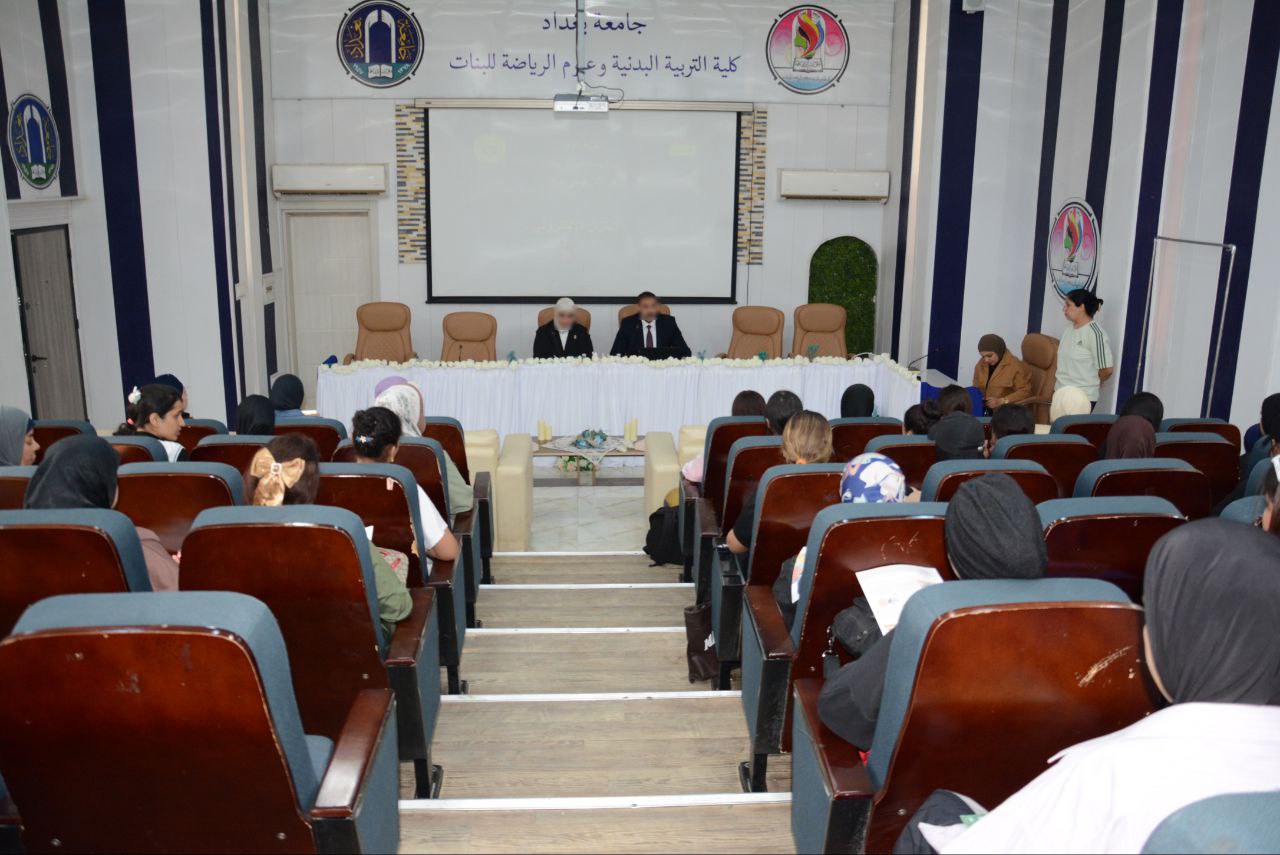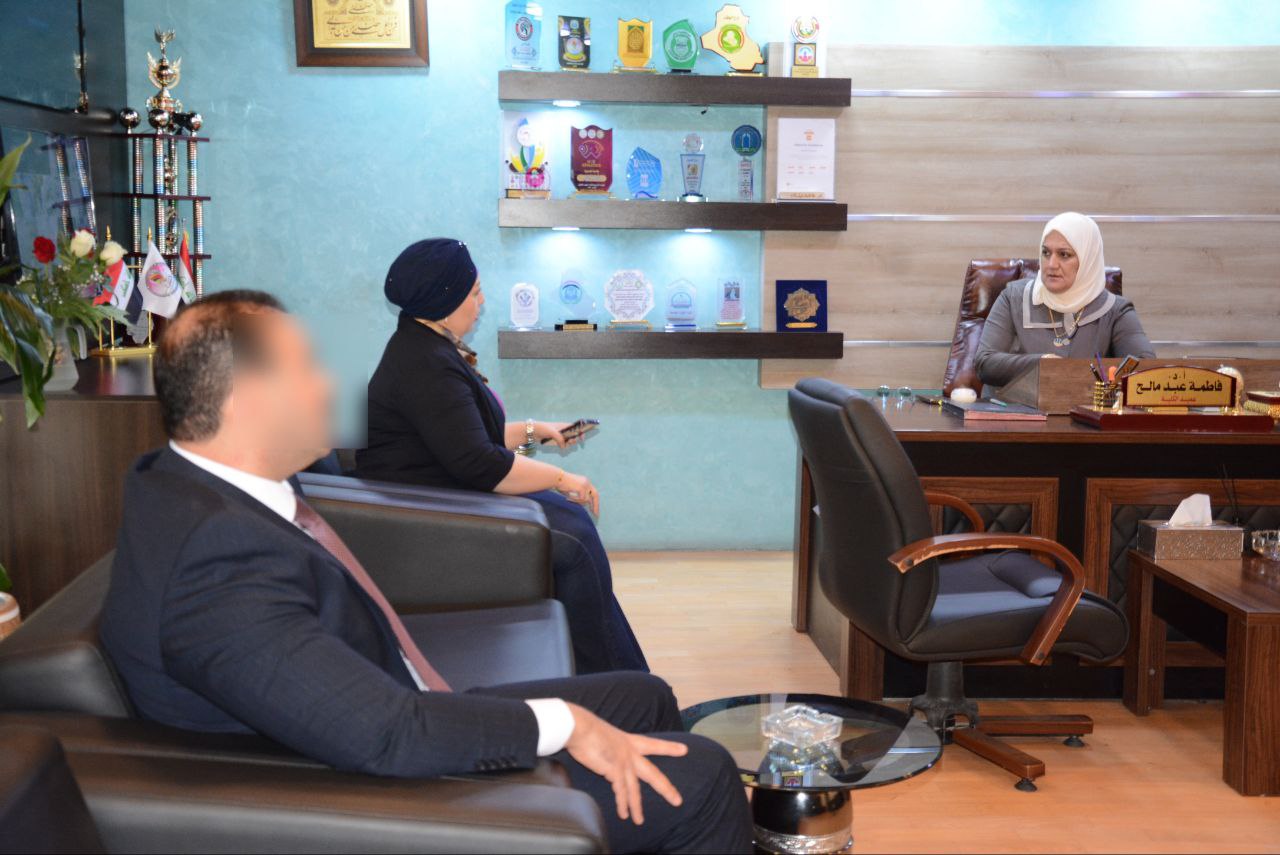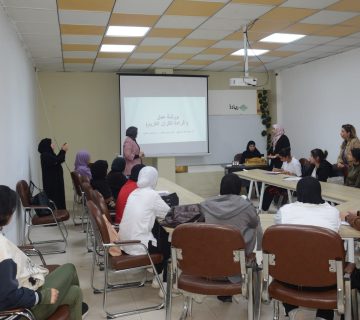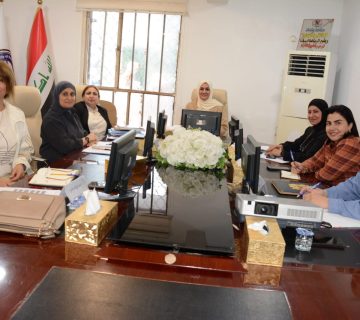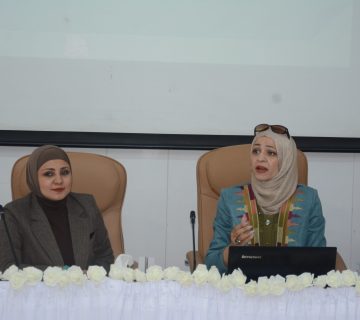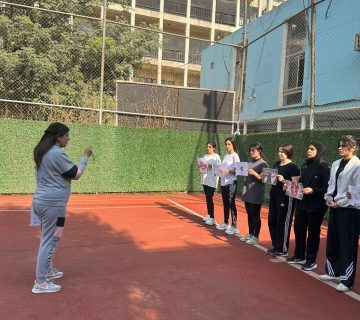

The Follow-Up Division at the College of Physical Education and Sports Sciences for Women, University of Baghdad, in cooperation with the Scientific Affairs Unit and the Psychological Counseling and Educational Guidance Unit, and under the patronage of the Dean, Prof. Fatima Abd Malih, hosted a delegation from the National Security Service and the University Security Office to hold an awareness workshop for undergraduate students titled (Cyber Extortion).
The workshop aimed to raise students’ awareness about the dangers of cyber extortion, ways to confront it, and methods of prevention.
The workshop addressed the definition of cyber extortion and its main forms, including emotional, financial, and workplace-related extortion. It also highlighted the factors that make individuals vulnerable, such as failing to register SIM cards under their names, neglecting digital privacy and sharing personal information, using weak or repeated passwords, emotional vulnerability and seeking comfort online, sharing devices or using unsecured public networks, and fear of scandal or social judgment.
The speakers discussed key measures to avoid falling victim to cyber extortion, emphasizing the importance of not sharing personal information, photos, or private videos; enabling two-factor authentication for social media accounts; avoiding fake (anti-extortion) pages that exploit victims; and using the Aman Bot platform, which provides cybersecurity guidance. They also explained the proper steps to follow when exposed to extortion, advising students not to comply with the perpetrator and to take the following actions:
-
Save all evidence, messages, and conversations related to the crime
-
Block the extorter immediately and cut all communication
-
Report the incident promptly to the authorities, such as the National Security Service
The delegation also announced the dedicated hotline (131) for receiving reports of cyber-extortion cases, noting that the service handles more than 15,000 extortion complaints in addition to other criminal cases.
At the end of the event, the head of the Follow-Up Division, Lect. Rasha Waleed presented certificates of appreciation to the delegation of the National Security Service, acknowledging their efforts in delivering these awareness workshops that help ensure students’ safety and protect them from harmful behaviors infiltrating society.
Additionally, the College’s Media and Government Communications Division distributed awareness posters on cyber extortion to enhance students’ understanding of the crime and increase their knowledge of safe online practices and how to avoid suspicious websites.
It is worth noting that this awareness workshop supports the Sustainable Development Goals, specifically Goals 4 (Quality Education) and 17 (Partnerships for the Goals), by promoting safety, awareness, and collaboration.
The Follow-Up Division at the College of Physical Education and Sports Sciences for Women, University of Baghdad, in cooperation with the Scientific Affairs Unit and the Psychological Counseling and Educational Guidance Unit, and under the patronage of the Dean, Prof. Fatima Abd Malih, hosted a delegation from the National Security Service and the University Security Office to hold an awareness workshop for undergraduate students titled (Cyber Extortion).
The workshop aimed to raise students’ awareness about the dangers of cyber extortion, ways to confront it, and methods of prevention.
The workshop addressed the definition of cyber extortion and its main forms, including emotional, financial, and workplace-related extortion. It also highlighted the factors that make individuals vulnerable, such as failing to register SIM cards under their names, neglecting digital privacy and sharing personal information, using weak or repeated passwords, emotional vulnerability and seeking comfort online, sharing devices or using unsecured public networks, and fear of scandal or social judgment.
The speakers discussed key measures to avoid falling victim to cyber extortion, emphasizing the importance of not sharing personal information, photos, or private videos; enabling two-factor authentication for social media accounts; avoiding fake (anti-extortion) pages that exploit victims; and using the Aman Bot platform, which provides cybersecurity guidance. They also explained the proper steps to follow when exposed to extortion, advising students not to comply with the perpetrator and to take the following actions:
-
Save all evidence, messages, and conversations related to the crime
-
Block the extorter immediately and cut all communication
-
Report the incident promptly to the authorities, such as the National Security Service
The delegation also announced the dedicated hotline (131) for receiving reports of cyber-extortion cases, noting that the service handles more than 15,000 extortion complaints in addition to other criminal cases.
At the end of the event, the head of the Follow-Up Division, Lect. Rasha Waleed presented certificates of appreciation to the delegation of the National Security Service, acknowledging their efforts in delivering these awareness workshops that help ensure students’ safety and protect them from harmful behaviors infiltrating society.
Additionally, the College’s Media and Government Communications Division distributed awareness posters on cyber extortion to enhance students’ understanding of the crime and increase their knowledge of safe online practices and how to avoid suspicious websites.
It is worth noting that this awareness workshop supports the Sustainable Development Goals, specifically Goals 4 (Quality Education) and 17 (Partnerships for the Goals), by promoting safety, awareness, and collaboration.