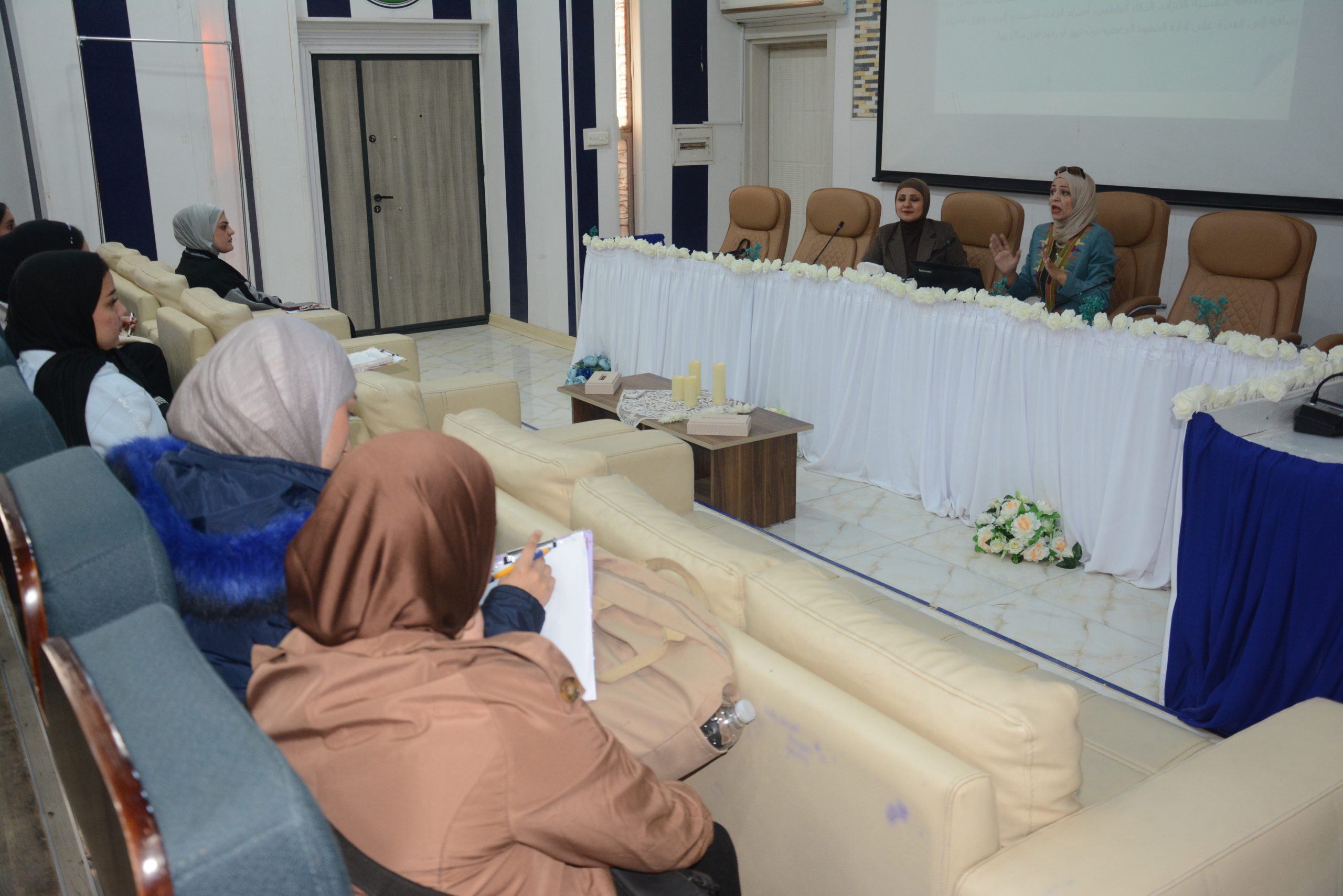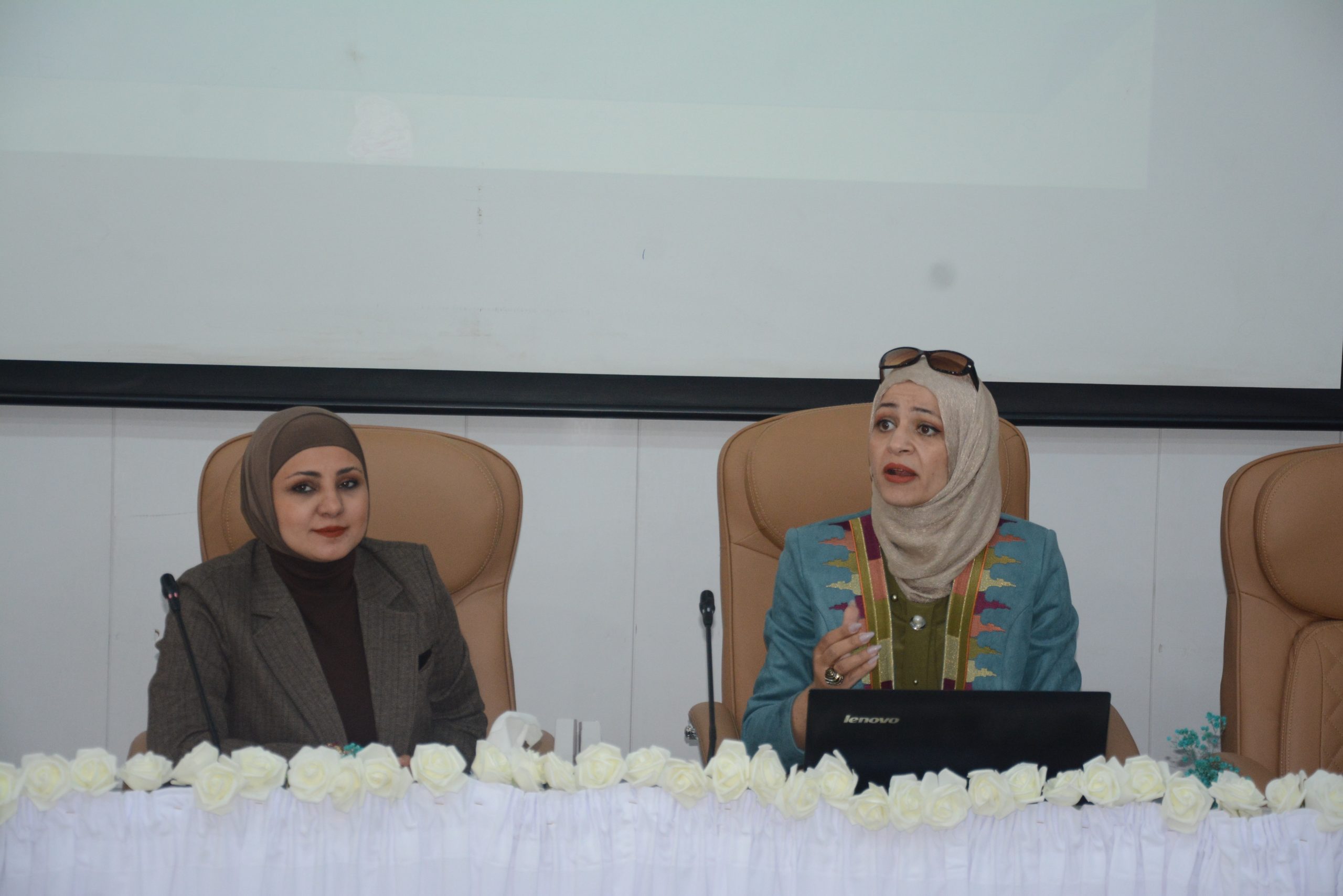
The University Psychological Counseling Unit at the College of Physical Education and Sports Sciences for Women, University of Baghdad, organized an awareness lecture for first-year students titled (Psychological Elegance for University Students). The lecture was part of the Unified Counseling Week Program and was delivered by Lect. Dr Baidaa Tariq from the Individual Games Department, along with Lect. Dr Hind Salem, Head of the Unit.
The lecture discussed the concept of psychological elegance, which reflects a set of internal traits and behaviors aligned with an individual’s personality. This type of elegance influences emotional balance and enables students to handle various situations with flexibility and civility. The speakers emphasized that psychological elegance is a fundamental element that enhances students’ efficiency and their ability to achieve academic and social success.
They further explained that students who possess this quality are better equipped to resolve conflicts calmly and participate effectively in group environments. Their personalities also tend to exhibit emotional intelligence, making them more likable and cooperative within their university community. One of the key outcomes of psychological elegance is the development of positive and balanced relationships with peers and faculty members, as students become more aware of their emotions and leave a stable, refined impression on others.
The lecture also addressed the core components of psychological elegance, particularly emotional regulation, which plays a central role in maintaining inner balance. Students with psychological elegance do not let anger or frustration control them; instead, they think calmly and seek practical solutions without haste or excessive reactions. The skill of active listening also received significant attention, described as an indicator of emotional intelligence and a foundation for building healthy, sustainable relationships within the academic environment.
The session highlighted that such concepts align directly with the Sustainable Development Goals, particularly Goal 4, which focuses on providing quality education that strengthens students’ personal and social skills. These initiatives represent an important step toward fostering a supportive and inclusive learning environment that enhances mental well-being and academic performance.
The University Psychological Counseling Unit at the College of Physical Education and Sports Sciences for Women, University of Baghdad, organized an awareness lecture for first-year students titled (Psychological Elegance for University Students). The lecture was part of the Unified Counseling Week Program and was delivered by Lect. Dr Baidaa Tariq from the Individual Games Department, along with Lect. Dr Hind Salem, Head of the Unit.
The lecture discussed the concept of psychological elegance, which reflects a set of internal traits and behaviors aligned with an individual’s personality. This type of elegance influences emotional balance and enables students to handle various situations with flexibility and civility. The speakers emphasized that psychological elegance is a fundamental element that enhances students’ efficiency and their ability to achieve academic and social success.
They further explained that students who possess this quality are better equipped to resolve conflicts calmly and participate effectively in group environments. Their personalities also tend to exhibit emotional intelligence, making them more likable and cooperative within their university community. One of the key outcomes of psychological elegance is the development of positive and balanced relationships with peers and faculty members, as students become more aware of their emotions and leave a stable, refined impression on others.
The lecture also addressed the core components of psychological elegance, particularly emotional regulation, which plays a central role in maintaining inner balance. Students with psychological elegance do not let anger or frustration control them; instead, they think calmly and seek practical solutions without haste or excessive reactions. The skill of active listening also received significant attention, described as an indicator of emotional intelligence and a foundation for building healthy, sustainable relationships within the academic environment.
The session highlighted that such concepts align directly with the Sustainable Development Goals, particularly Goal 4, which focuses on providing quality education that strengthens students’ personal and social skills. These initiatives represent an important step toward fostering a supportive and inclusive learning environment that enhances mental well-being and academic performance.