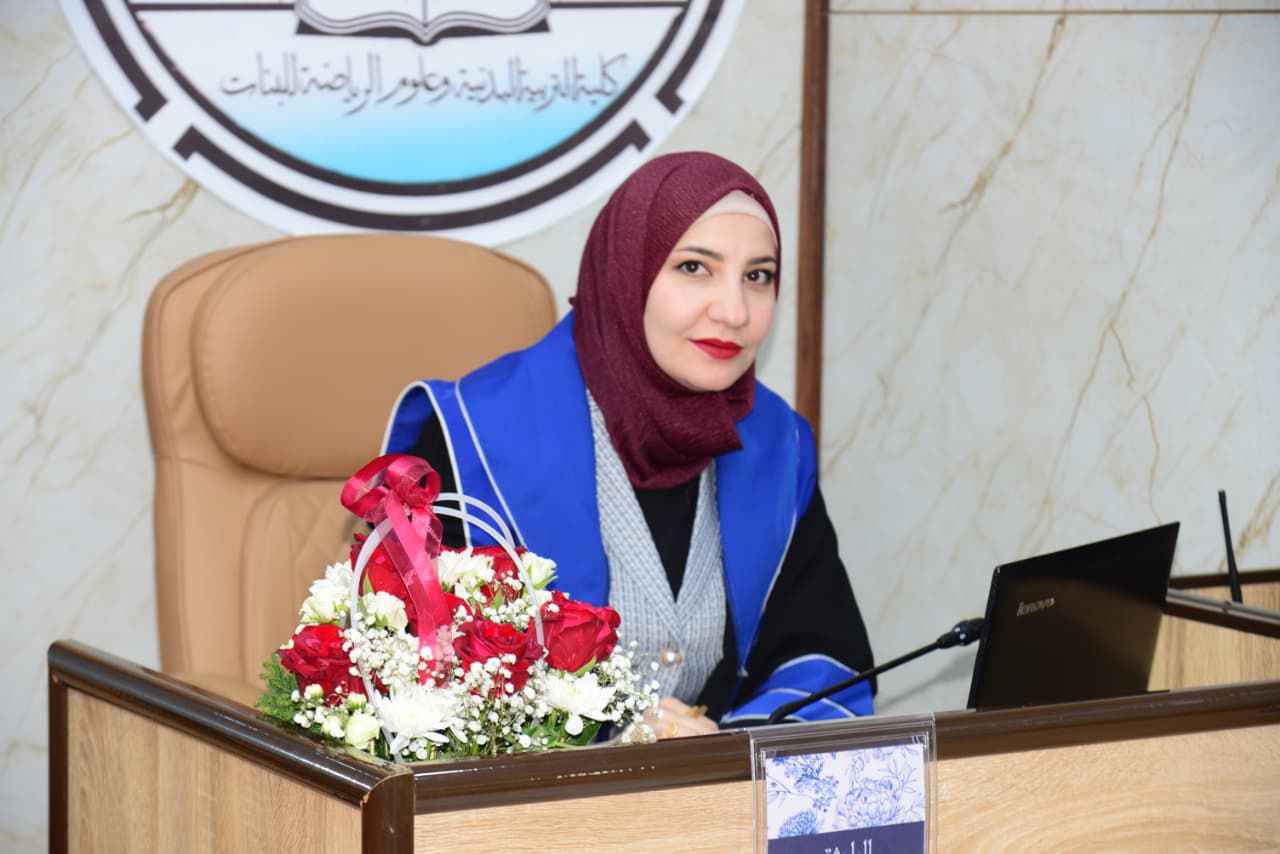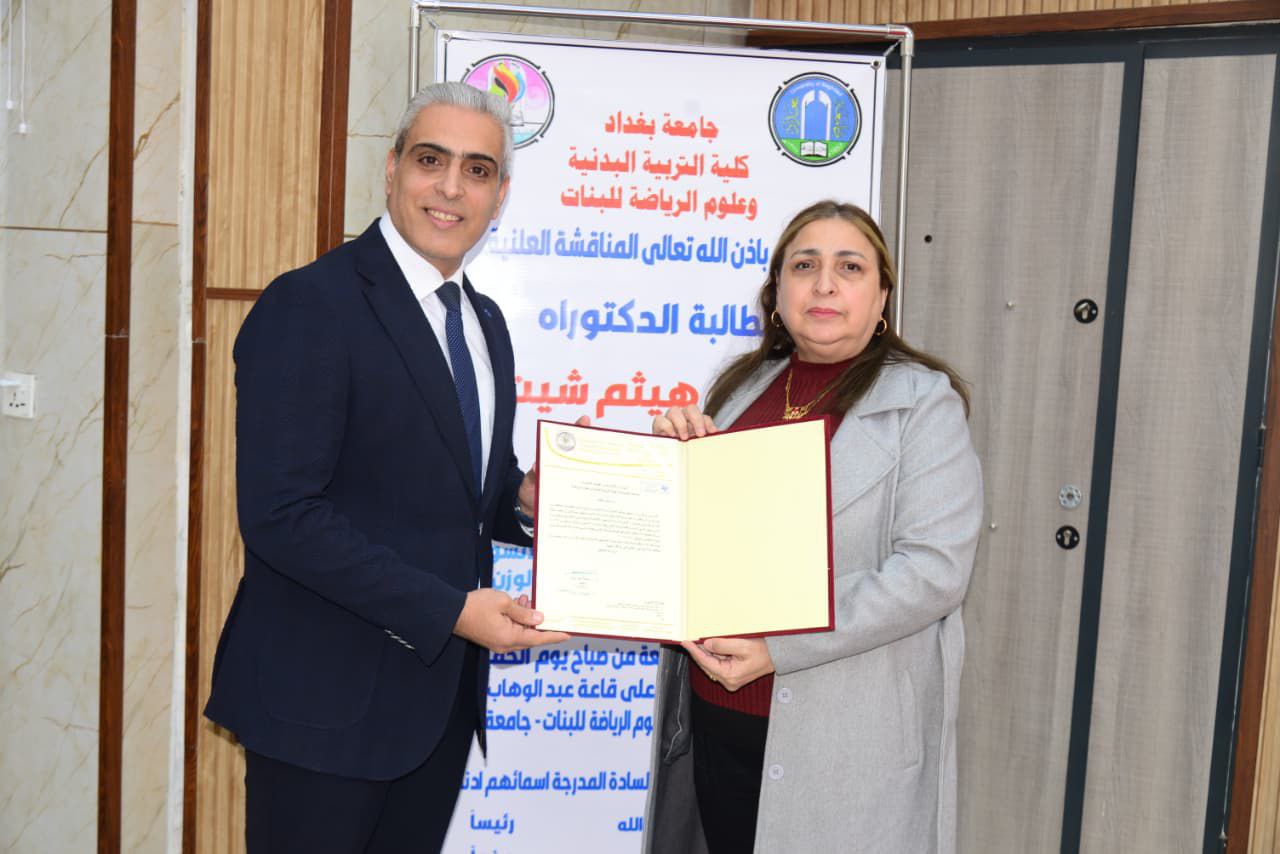

A doctoral dissertation titled “The Effect of Weighted Aerobic Exercises Accompanied by a Balanced Diet on Triglycerides, Leptin, and Insulin Resistance, and Anthropometric Measurements for Overweight Females Aged 35–40 Years” by researcher Shahad Haitham Sheet was discussed at the College of Physical Education and Sports Sciences for Women, University of Baghdad. The discussion committee consisted of Professor Dr. Fallah Hassan Abdullah from the University of Al-Qadisiyah as Chair, Professor Dr. Israa Fuad Saleh from the University of Baghdad as Supervisor, and Professor Dr. Huda Badawi Shabib, Professor Dr. Ghusoon Natiq Abdul Hamid, Professor Dr. Lamia Abdul Sattar Khalil, and Assistant Professor Dr. Ishraq Ghalib Ouda as members.
The study aimed to answer key questions regarding the effectiveness of weighted aerobic exercises combined with a balanced diet in reducing triglycerides, leptin, and insulin resistance, in addition to their impact on anthropometric measurements among the targeted age group. It also aimed to provide scientific evidence supporting the efficacy of integrating physical activity and nutrition to improve public health and reduce obesity risks.
The study concluded that a weighted aerobic exercise program accompanied by a balanced diet serves as an effective strategy for improving health indicators and anthropometric measurements among overweight women aged 35–40, noting that this comprehensive approach outperforms the impact of athletic intervention alone.
The study recommends the integration of similar programs that combine directed physical activity and proper nutrition within the therapeutic and rehabilitative plans offered by health and physical therapy centers. It also emphasizes the importance of qualifying and training specialized personnel, such as aerobics instructors and nutritionists, to manage obesity cases and provide necessary support to participants to ensure program compliance and achieve the best possible health outcomes. This study opens the door for further future research exploring the long-term effects of these interventions and evaluating their effectiveness across different age groups and populations.
This study fulfills one of the Sustainable Development Goals (SDGs), specifically Goal 4: Quality Education.