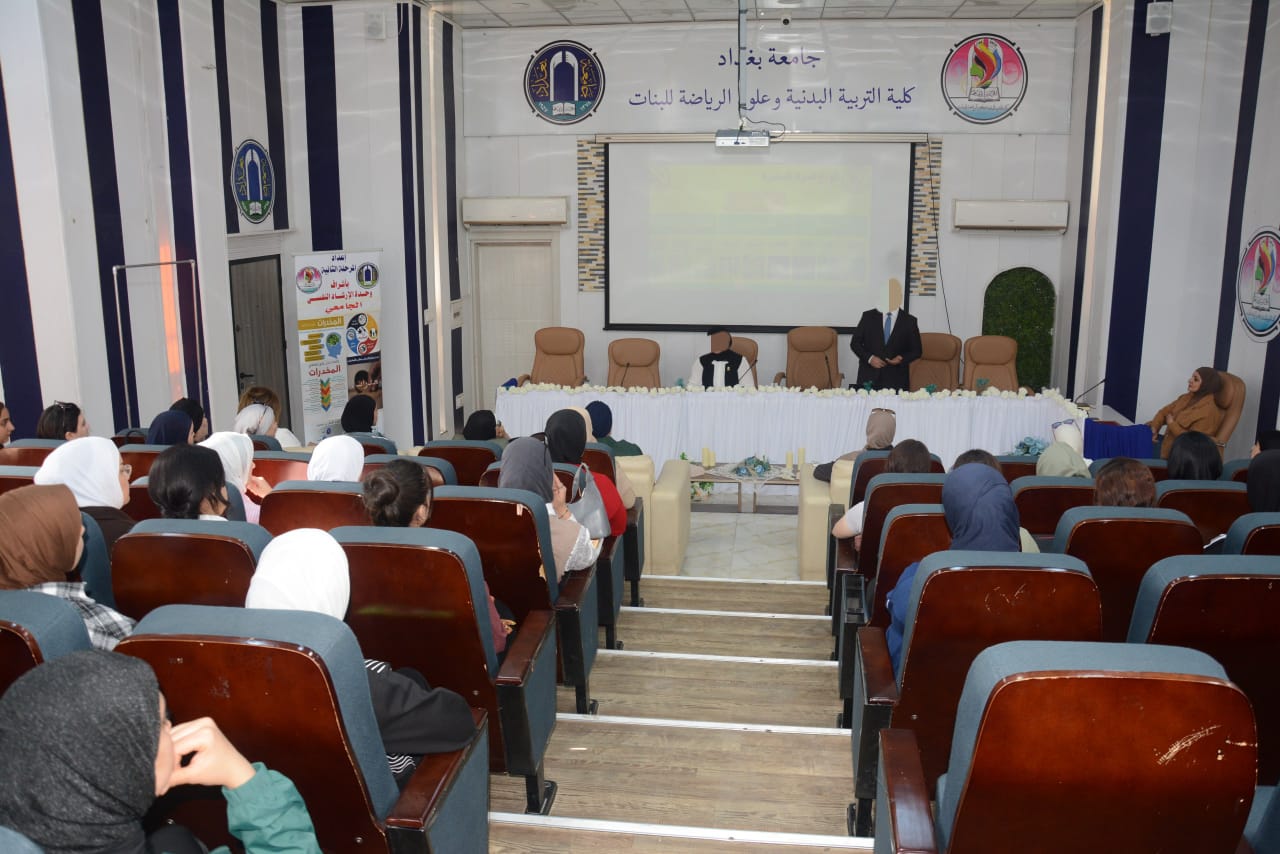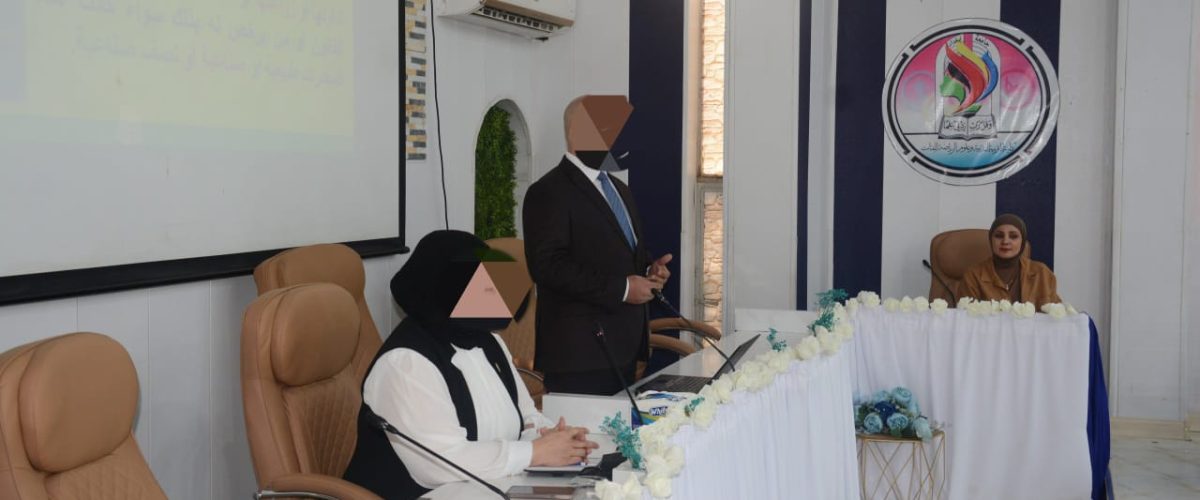
The University Psychological Counseling Unit, in cooperation with the Scientific Affairs Unit and the Follow-up Unit at the College of Physical Education and Sports Sciences for Women / University of Baghdad, and under the patronage of the Dean, Professor Dr. Fatima Abd Malih, and the supervision of its director Hind Salem Tayeh, hosted a delegation from the National Security Service to hold a workshop titled: Intrusive Social Phenomena (The Drug Phenomenon).
The workshop aimed to introduce the concept of addiction, its types, its dangers, and ways to confront this serious threat to society.
Addiction was defined as a compulsive urge to continue using a narcotic substance or obtaining it by any means, with a tendency to increase the dosage, resulting in both psychological and physical dependence on these substances.
The speakers discussed the types of drugs—natural, semi-natural, and synthetic—and explained the legal penalties for drug use.
They also highlighted the reasons behind drug abuse, including: negative peer influence, curiosity and the desire to experiment, exam and academic pressure, the impact of films and music, depression and anxiety, frustration and low self-esteem, and lack of moral, religious, and health awareness.
The workshop also covered the latest scientific approaches to understanding the causes of addiction and its effects on the individual, the family, and society. It reviewed early treatment methods and rehabilitation programs, emphasizing the importance of community awareness and the family’s role in reducing risky behaviors. The speakers stressed the need for education on the dangers of drugs and their impact on society in general and on families in particular.
This workshop supports one of the Sustainable Development Goals, specifically Goal 3 (Good Health and Well-being).
The University Psychological Counseling Unit, in cooperation with the Scientific Affairs Unit and the Follow-up Unit at the College of Physical Education and Sports Sciences for Women / University of Baghdad, and under the patronage of the Dean, Professor Dr. Fatima Abd Malih, and the supervision of its director Hind Salem Tayeh, hosted a delegation from the National Security Service to hold a workshop titled: Intrusive Social Phenomena (The Drug Phenomenon).
The workshop aimed to introduce the concept of addiction, its types, its dangers, and ways to confront this serious threat to society.
Addiction was defined as a compulsive urge to continue using a narcotic substance or obtaining it by any means, with a tendency to increase the dosage, resulting in both psychological and physical dependence on these substances.
The speakers discussed the types of drugs—natural, semi-natural, and synthetic—and explained the legal penalties for drug use.
They also highlighted the reasons behind drug abuse, including: negative peer influence, curiosity and the desire to experiment, exam and academic pressure, the impact of films and music, depression and anxiety, frustration and low self-esteem, and lack of moral, religious, and health awareness.
The workshop also covered the latest scientific approaches to understanding the causes of addiction and its effects on the individual, the family, and society. It reviewed early treatment methods and rehabilitation programs, emphasizing the importance of community awareness and the family’s role in reducing risky behaviors. The speakers stressed the need for education on the dangers of drugs and their impact on society in general and on families in particular.
This workshop supports one of the Sustainable Development Goals, specifically Goal 3 (Good Health and Well-being).