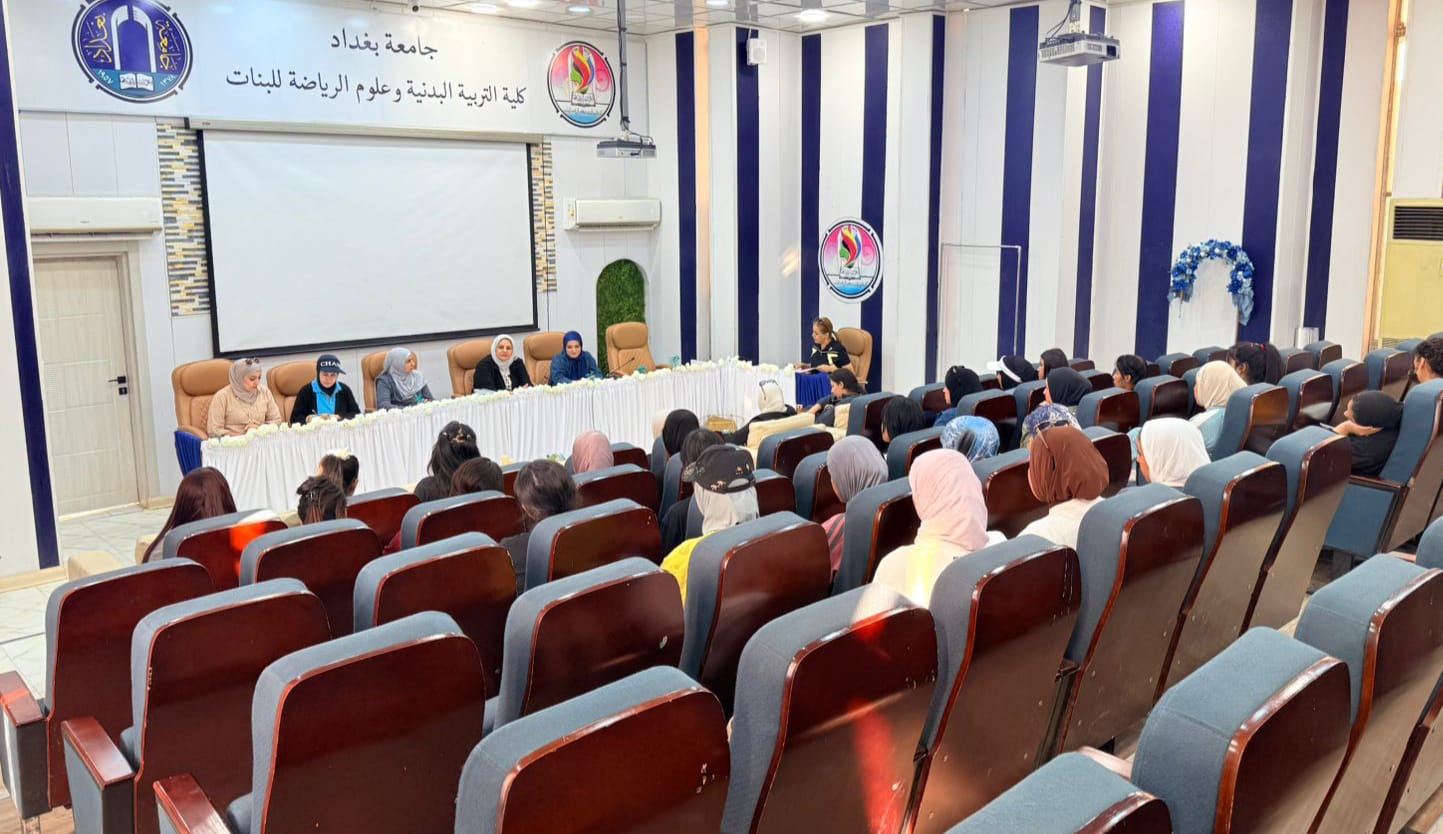
The Continuing Education Unit at the College of Physical Education and Sports Sciences for Women, University of Baghdad, held a scientific workshop entitled )Hand Sewing Skills Training, presented by a group of distinguished faculty members.
The lecturers defined sewing as the art of joining fabrics and clothing using specific threads to create finished items such as garments, curtains, or tablecloths. They explained that sewing is not limited to repairing clothes; it also includes designing and producing fashion.
They highlighted the essential sewing tools, including:
-
Needle: used for stitching fabrics together
-
Thread: for connecting fabric pieces
-
Scissors: for precise cutting
-
Measuring tape: to measure length and width accurately
-
Pins: to secure fabric before stitching
-
Sewing machine: to speed up work and ensure greater precision
-
Thimble: to protect fingers during hand sewing
The presenters also explained the relationship between sewing and sports. This association may seem distant at first glance, but it is, in reality, closely connected and highly important in many areas of modern sports. Sewing plays a fundamental role in the design and production of sportswear, including:
-
Comfortable and smart sports clothing: precise stitching enhances flexibility and fluid movement
-
Use of special breathable and sweat-absorbing fabrics
-
Designing apparel based on the type of sport:
-
Swimwear is stitched to reduce water resistance
-
Running outfits are made with lightweight, breathable threads
-
Gymnastics and wrestling uniforms require high elasticity
-
Protective sportswear: used in cycling or football, where stitching strengthens specific areas such as knees or elbows
-
Advanced industrial sewing: using laser or heat-weld techniques instead of needles to reinforce certain parts
-
The discussion expanded to sewing in sports footwear and equipment. Running and football shoes, for example, are stitched with strong, water-resistant threads to ensure stability and durability. Precise stitching directly affects pressure distribution on the foot and helps prevent injuries. Balls used in sports such as football, basketball, and handball are assembled with accurate stitching that influences their shape, bounce, and spin.
They also noted the role of sewing in medical and sports rehabilitation. Medical stitching—such as suturing ligaments or tendons after injuries—helps athletes regain movement and performance. Fine stitching in supportive devices, such as braces or compression wraps, helps stabilize joints and support muscles.
Moreover, modern technologies such as 3D printing and programmed stitching have entered the field of sportswear design to achieve perfect body fit. Conductive threads are now used in smart clothing to monitor vital signs such as heart rate and temperature.
From an aesthetic and psychological perspective, carefully crafted sportswear enhances athletes’ confidence and sense of professionalism. Colors and stitching styles also contribute to team identity and strengthen group belonging.
In conclusion, the presenters emphasized that sewing is not merely a craft but a functional and technical element in modern sports, impacting performance, comfort, safety, and appearance. It represents a connection between material science, biomechanics, and sports design.
The Continuing Education Unit at the College of Physical Education and Sports Sciences for Women, University of Baghdad, held a scientific workshop entitled )Hand Sewing Skills Training, presented by a group of distinguished faculty members.
The lecturers defined sewing as the art of joining fabrics and clothing using specific threads to create finished items such as garments, curtains, or tablecloths. They explained that sewing is not limited to repairing clothes; it also includes designing and producing fashion.
They highlighted the essential sewing tools, including:
-
Needle: used for stitching fabrics together
-
Thread: for connecting fabric pieces
-
Scissors: for precise cutting
-
Measuring tape: to measure length and width accurately
-
Pins: to secure fabric before stitching
-
Sewing machine: to speed up work and ensure greater precision
-
Thimble: to protect fingers during hand sewing
The presenters also explained the relationship between sewing and sports. This association may seem distant at first glance, but it is, in reality, closely connected and highly important in many areas of modern sports. Sewing plays a fundamental role in the design and production of sportswear, including:
-
Comfortable and smart sports clothing: precise stitching enhances flexibility and fluid movement
-
Use of special breathable and sweat-absorbing fabrics
-
Designing apparel based on the type of sport:
-
Swimwear is stitched to reduce water resistance
-
Running outfits are made with lightweight, breathable threads
-
Gymnastics and wrestling uniforms require high elasticity
-
Protective sportswear: used in cycling or football, where stitching strengthens specific areas such as knees or elbows
-
Advanced industrial sewing: using laser or heat-weld techniques instead of needles to reinforce certain parts
-
The discussion expanded to sewing in sports footwear and equipment. Running and football shoes, for example, are stitched with strong, water-resistant threads to ensure stability and durability. Precise stitching directly affects pressure distribution on the foot and helps prevent injuries. Balls used in sports such as football, basketball, and handball are assembled with accurate stitching that influences their shape, bounce, and spin.
They also noted the role of sewing in medical and sports rehabilitation. Medical stitching—such as suturing ligaments or tendons after injuries—helps athletes regain movement and performance. Fine stitching in supportive devices, such as braces or compression wraps, helps stabilize joints and support muscles.
Moreover, modern technologies such as 3D printing and programmed stitching have entered the field of sportswear design to achieve perfect body fit. Conductive threads are now used in smart clothing to monitor vital signs such as heart rate and temperature.
From an aesthetic and psychological perspective, carefully crafted sportswear enhances athletes’ confidence and sense of professionalism. Colors and stitching styles also contribute to team identity and strengthen group belonging.
In conclusion, the presenters emphasized that sewing is not merely a craft but a functional and technical element in modern sports, impacting performance, comfort, safety, and appearance. It represents a connection between material science, biomechanics, and sports design.