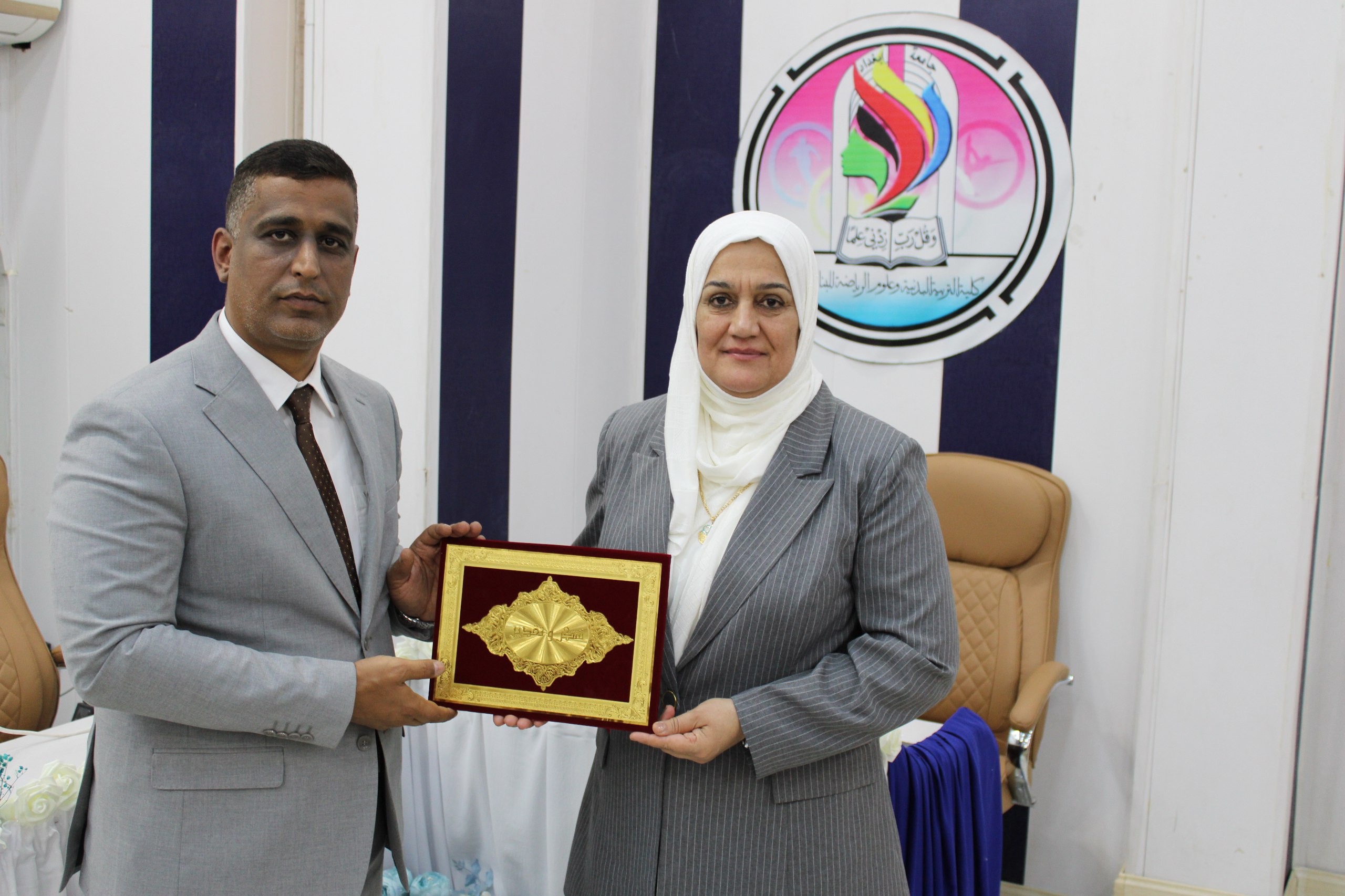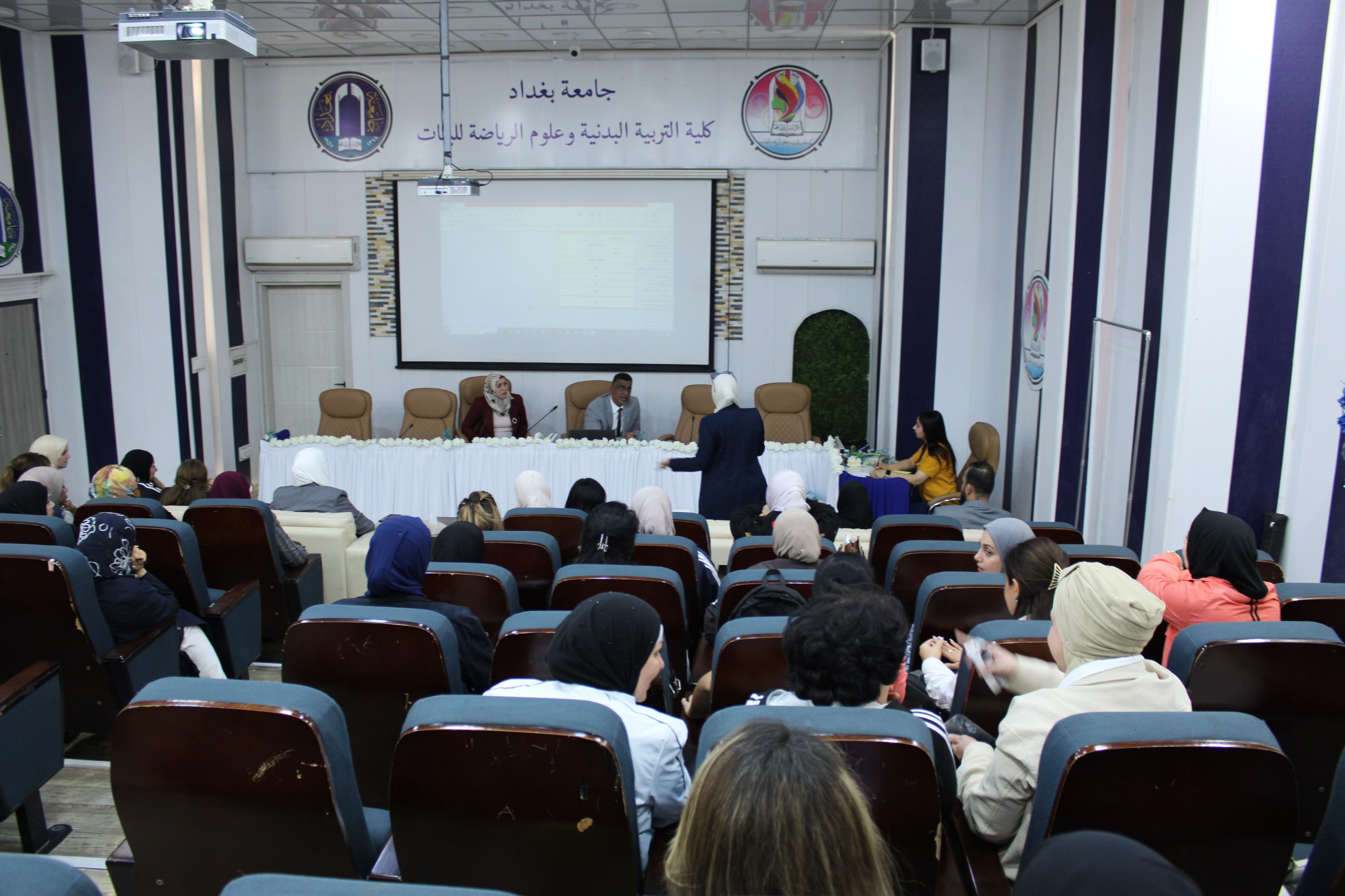
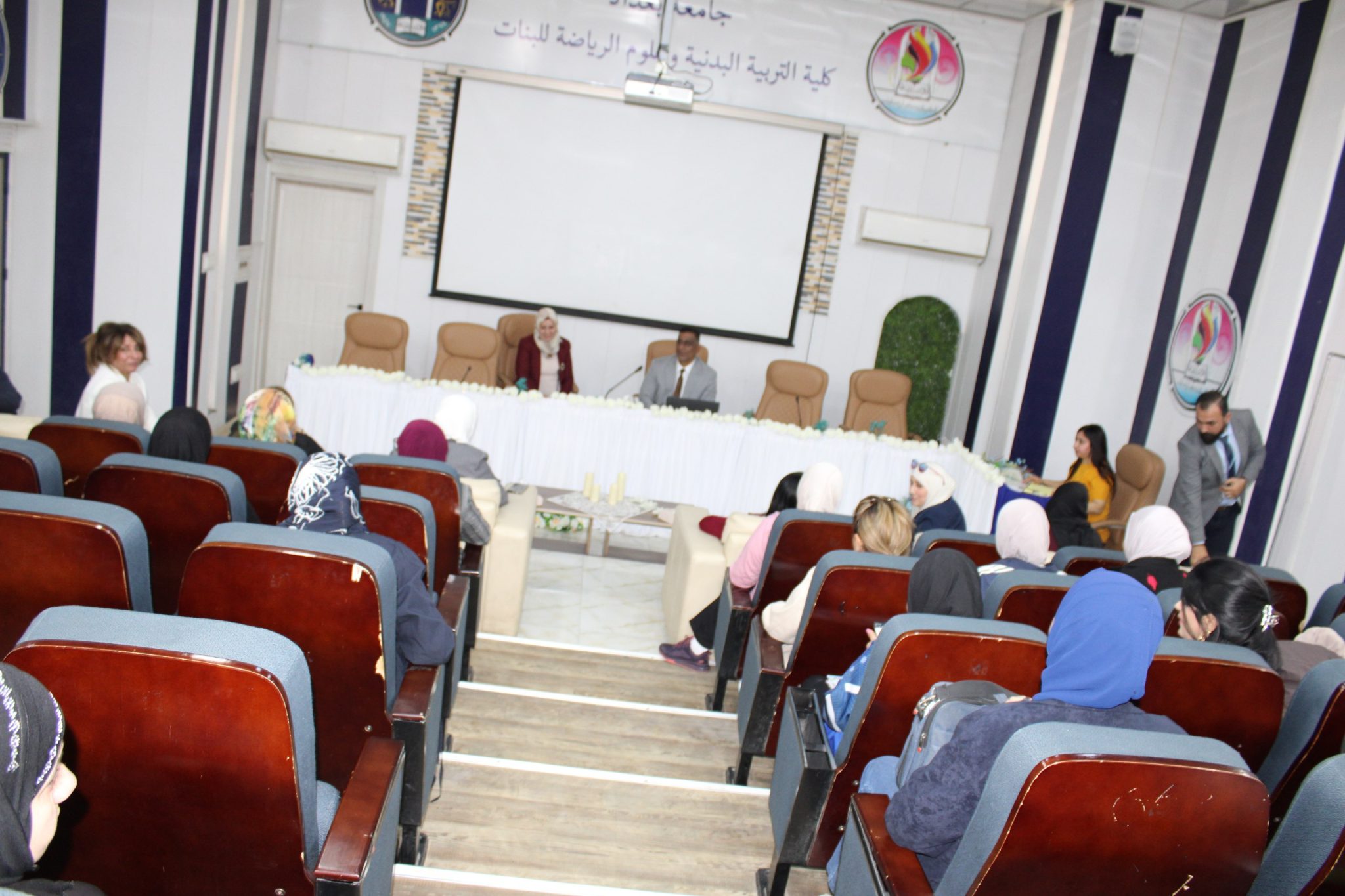
The Quality Assurance and Performance Evaluation Unit at the College of Physical Education and Sports Sciences for Women, University of Baghdad, hosted a workshop entitled (Analysis of Question Data), under the patronage of the Dean of the College, Professor Dr. Fatima Abd Malih, and under the supervision of Assist. Prof. Dr. Sura Ahmed Saleh. Lecturer Dr. Qutaiba Mumtaz Dawood presented the workshop.
The workshop aimed to enhance participants’ skills in using modern statistical methods to understand question patterns, measure their effectiveness, and improve the quality of test items.
The workshop included several key themes presented via the electronic platform, most notably: identifying types of data related to questions and methods of data collection; using statistical analysis software to evaluate test items and detect biases; analyzing difficulty and discrimination indices as well as reliability coefficients; and practical applications for interpreting analysis results and improving test construction.
Dr. Qutaiba also provided a detailed explanation of best practices in question data analysis, with opportunities for discussion and for participants to exchange experiences.
At the conclusion, attendees expressed their appreciation for the scientific and practical content presented, emphasizing the importance of such training programs in developing analytical skills and enhancing the quality of educational assessment.
This workshop contributes to achieving one of the Sustainable Development Goals, specifically Goal 4: Quality Education.
The Quality Assurance and Performance Evaluation Unit at the College of Physical Education and Sports Sciences for Women, University of Baghdad, hosted a workshop entitled (Analysis of Question Data), under the patronage of the Dean of the College, Professor Dr. Fatima Abd Malih, and under the supervision of Assist. Prof. Dr. Sura Ahmed Saleh. Lecturer Dr. Qutaiba Mumtaz Dawood presented the workshop.
The workshop aimed to enhance participants’ skills in using modern statistical methods to understand question patterns, measure their effectiveness, and improve the quality of test items.
The workshop included several key themes presented via the electronic platform, most notably: identifying types of data related to questions and methods of data collection; using statistical analysis software to evaluate test items and detect biases; analyzing difficulty and discrimination indices as well as reliability coefficients; and practical applications for interpreting analysis results and improving test construction.
Dr. Qutaiba also provided a detailed explanation of best practices in question data analysis, with opportunities for discussion and for participants to exchange experiences.
At the conclusion, attendees expressed their appreciation for the scientific and practical content presented, emphasizing the importance of such training programs in developing analytical skills and enhancing the quality of educational assessment.
This workshop contributes to achieving one of the Sustainable Development Goals, specifically Goal 4: Quality Education.