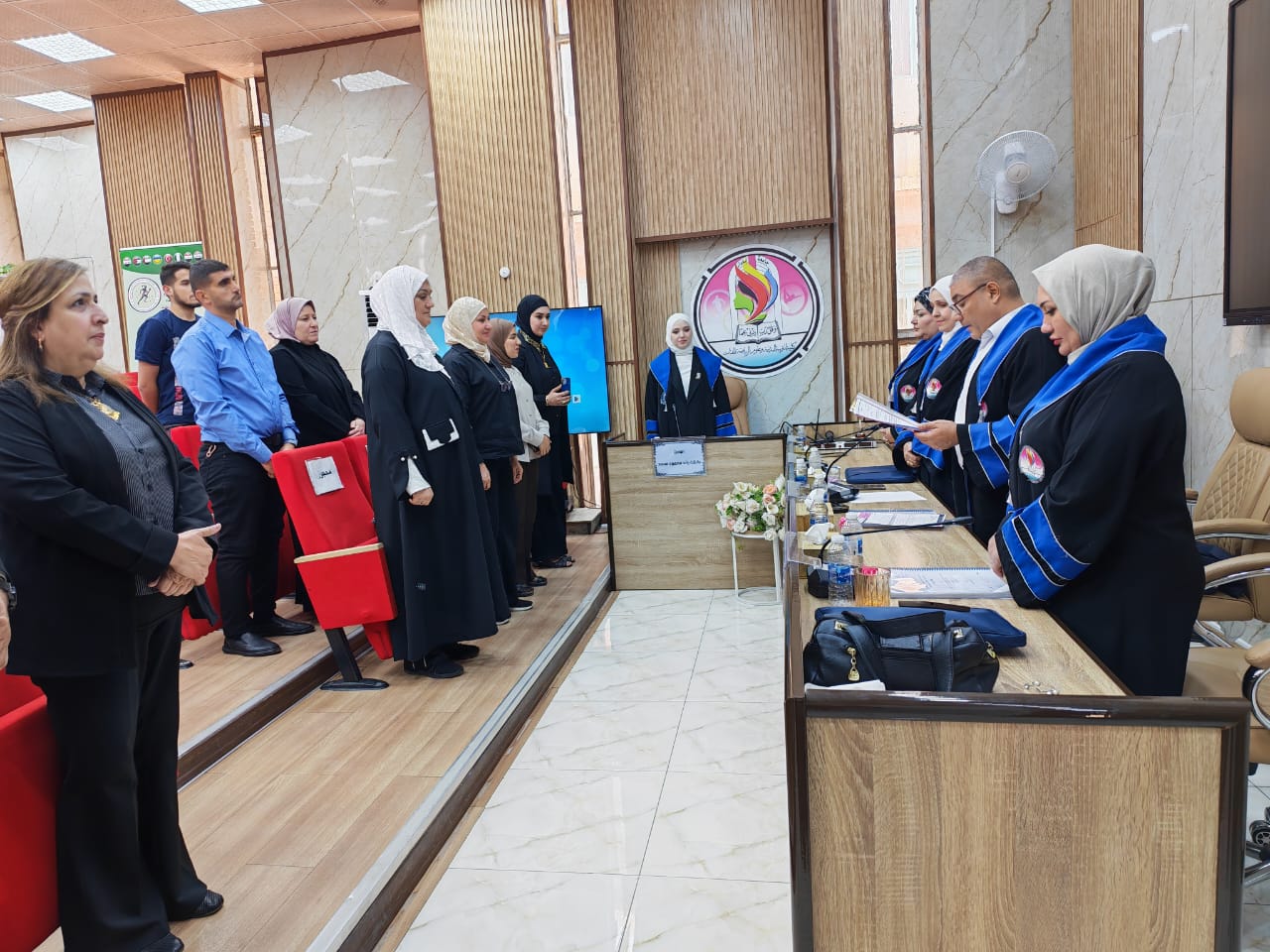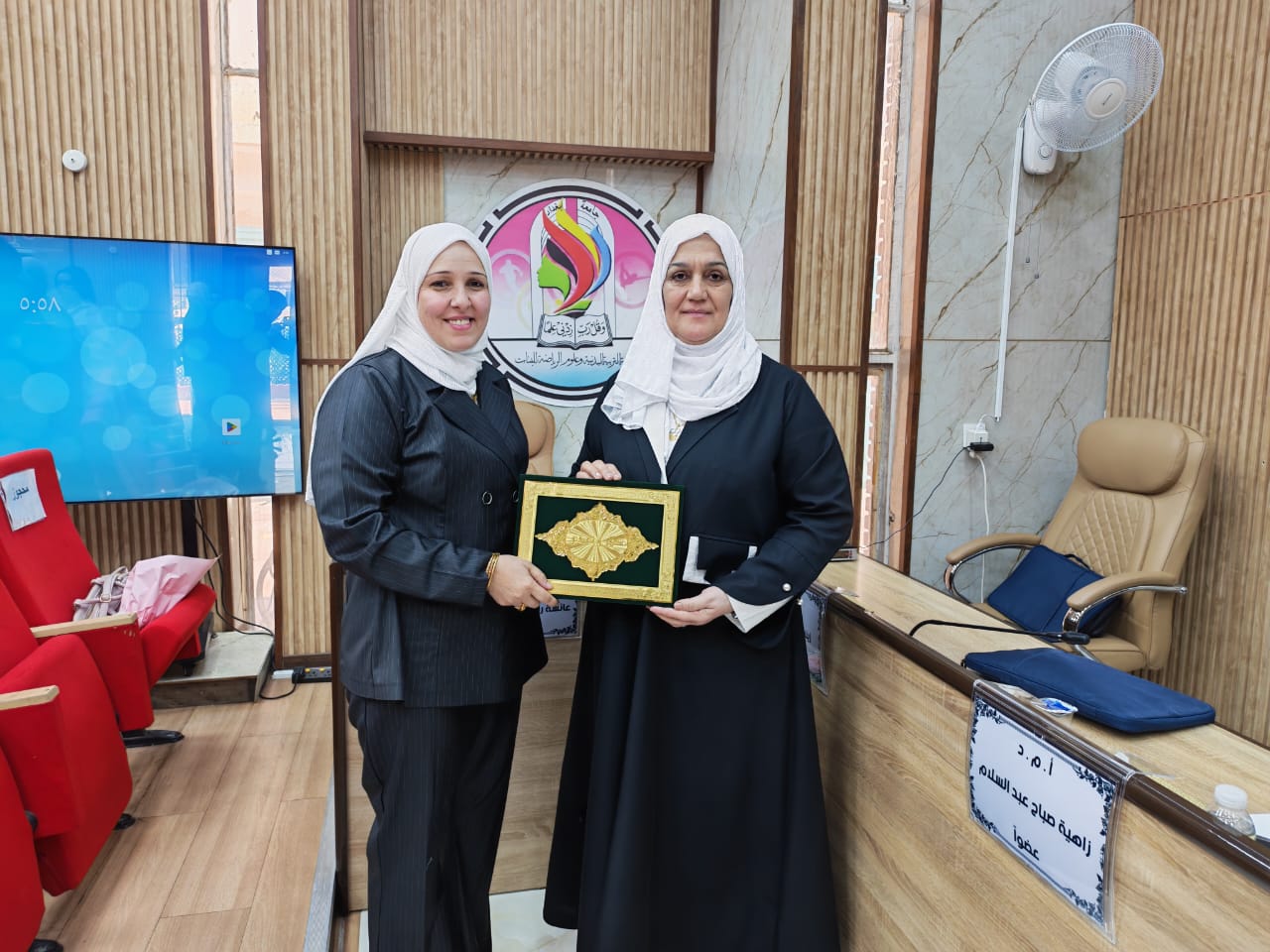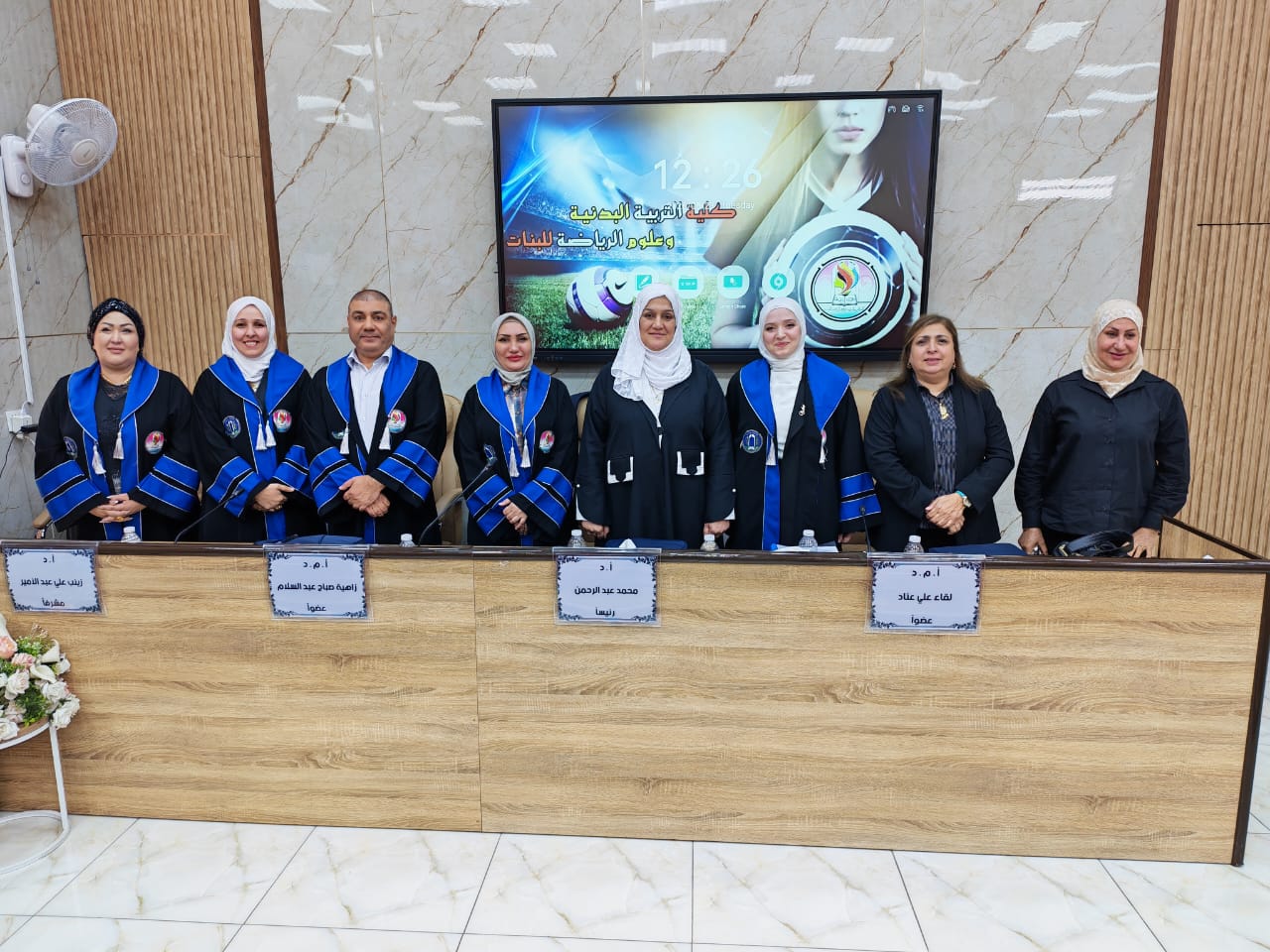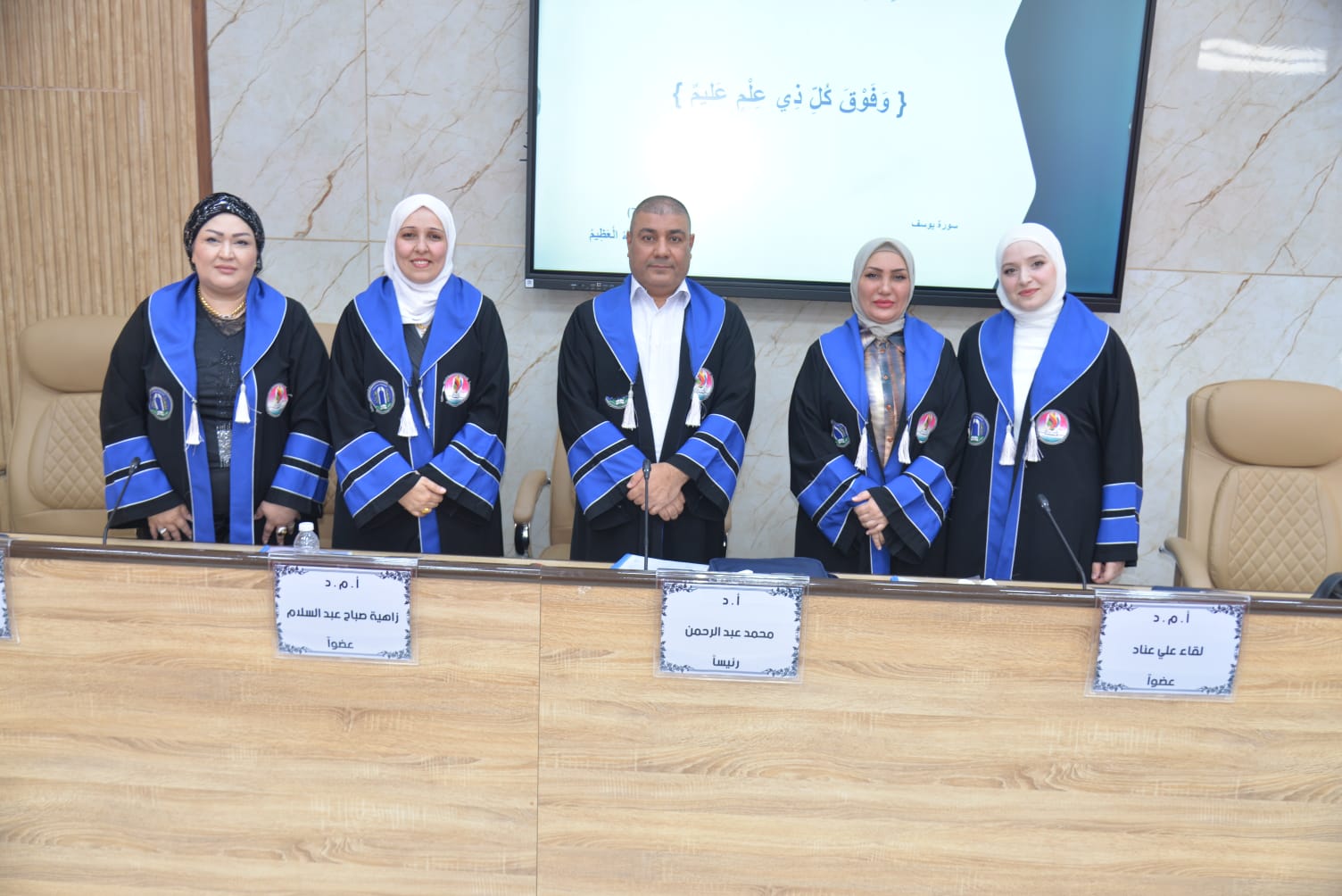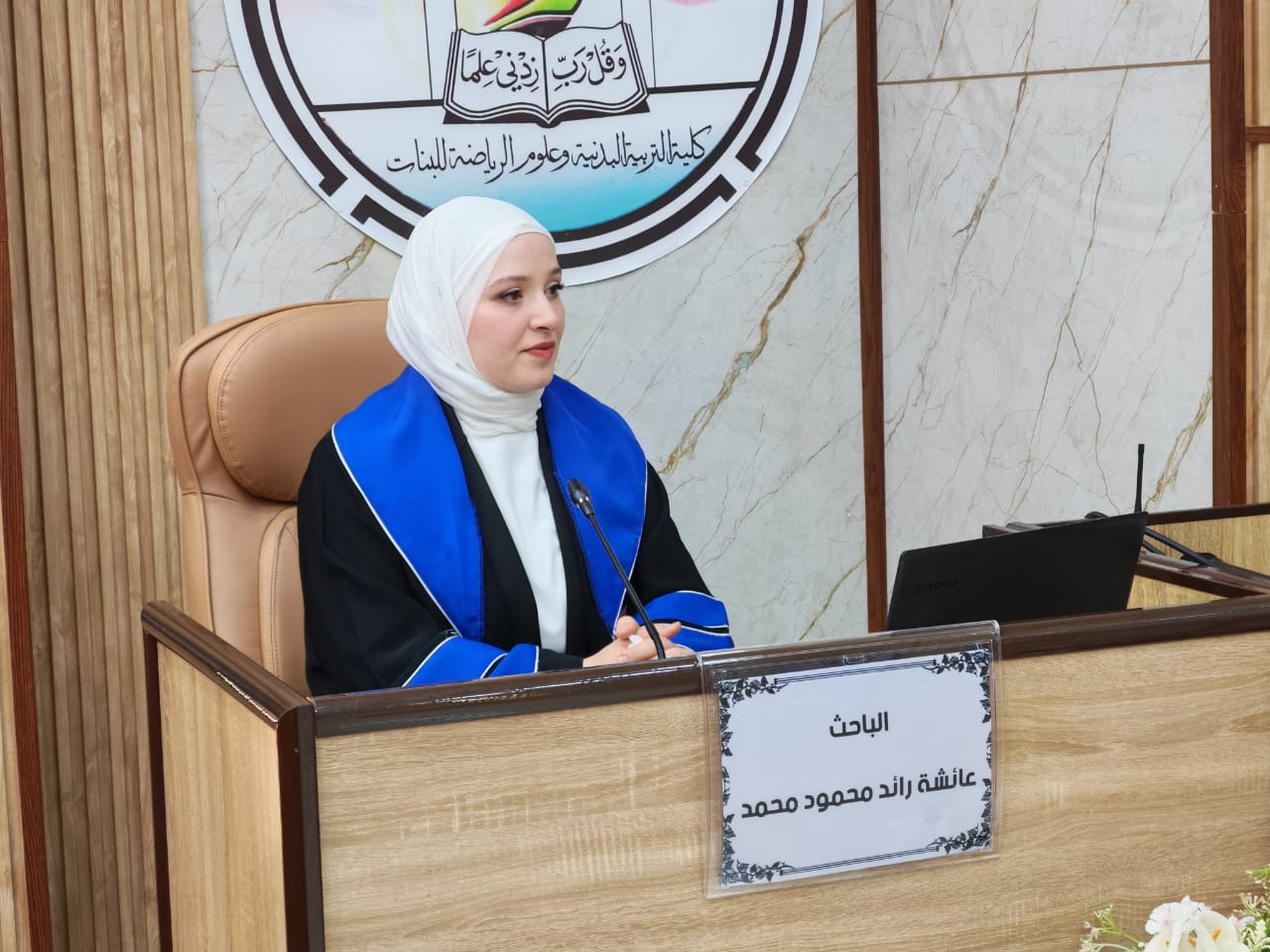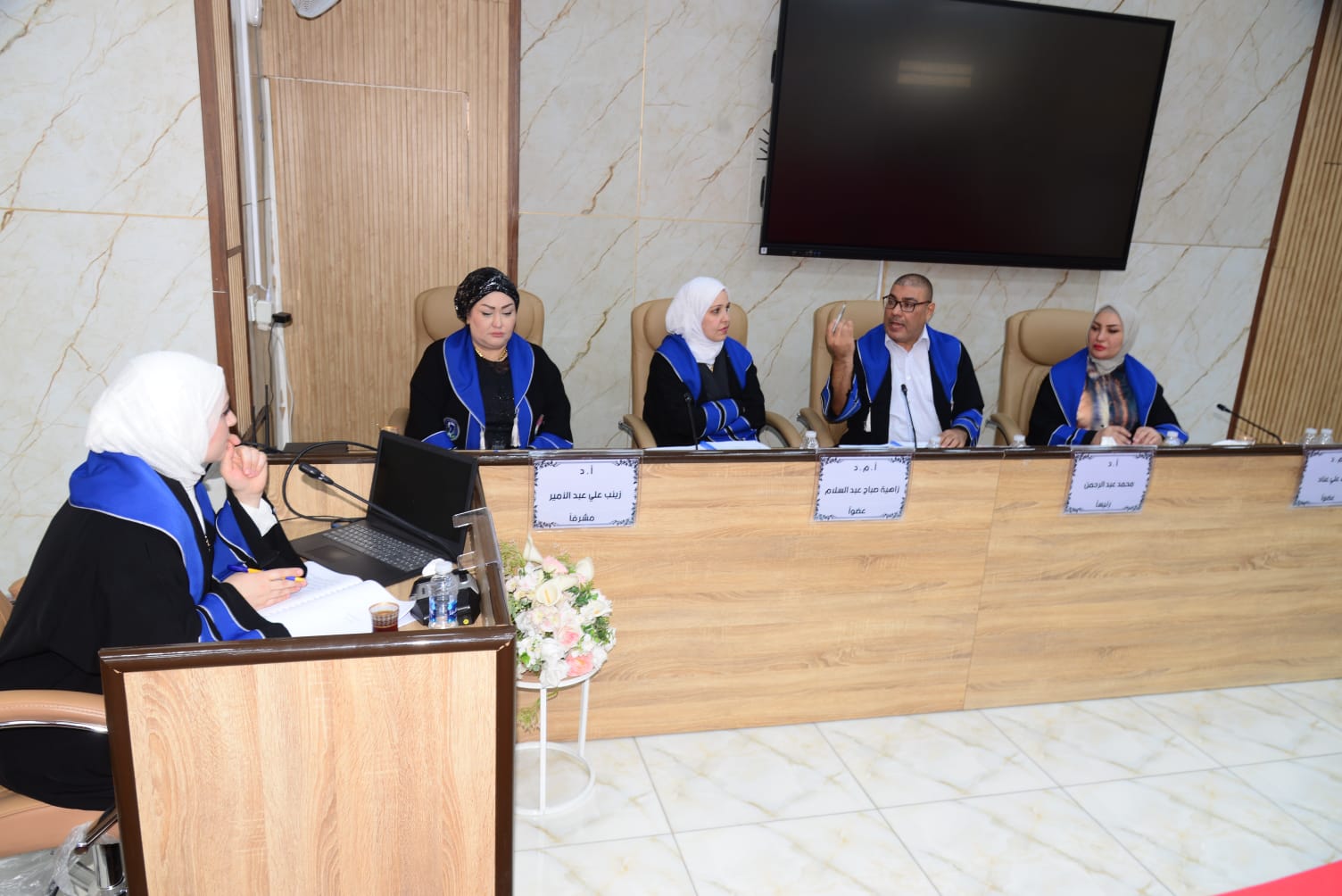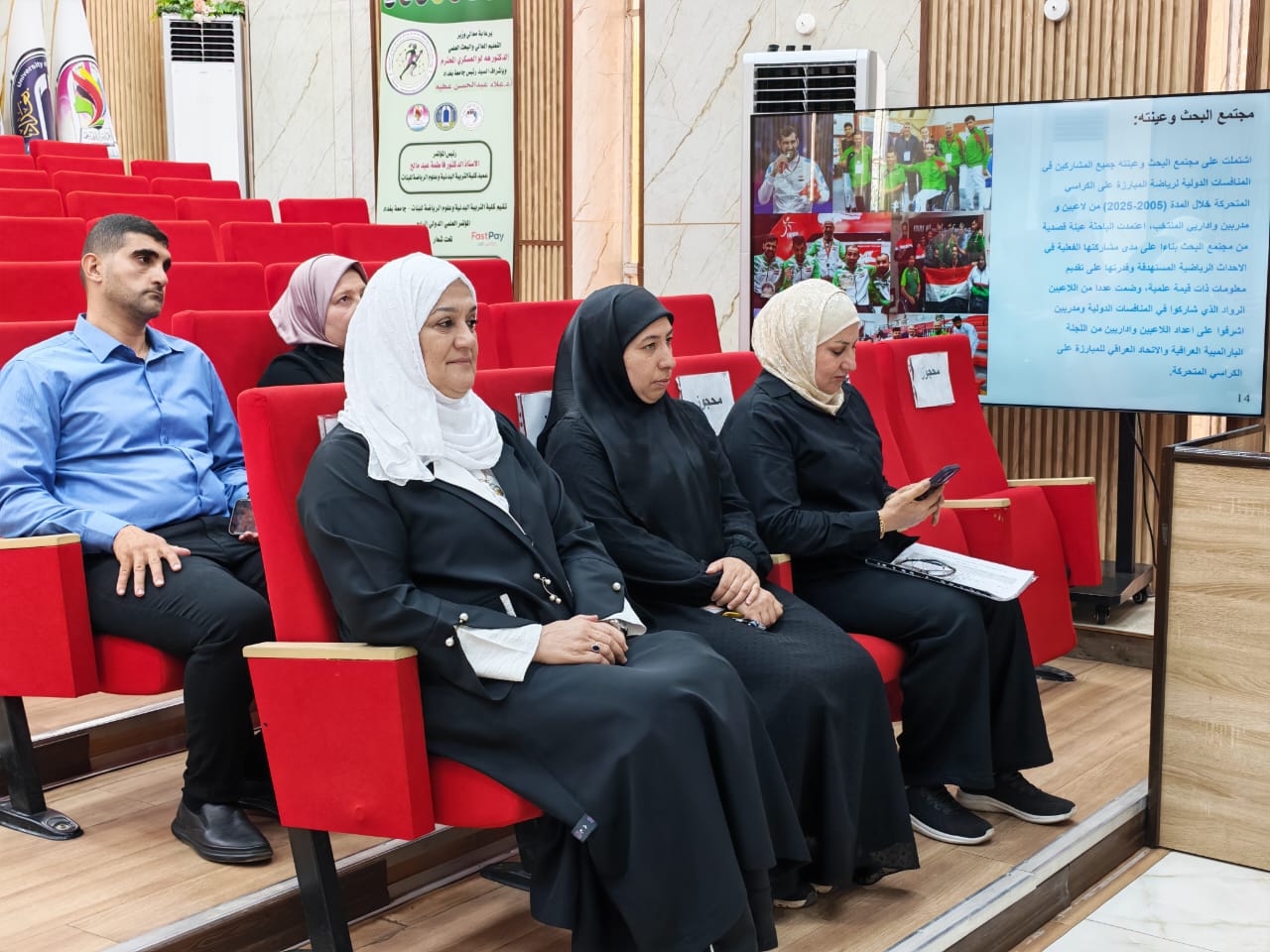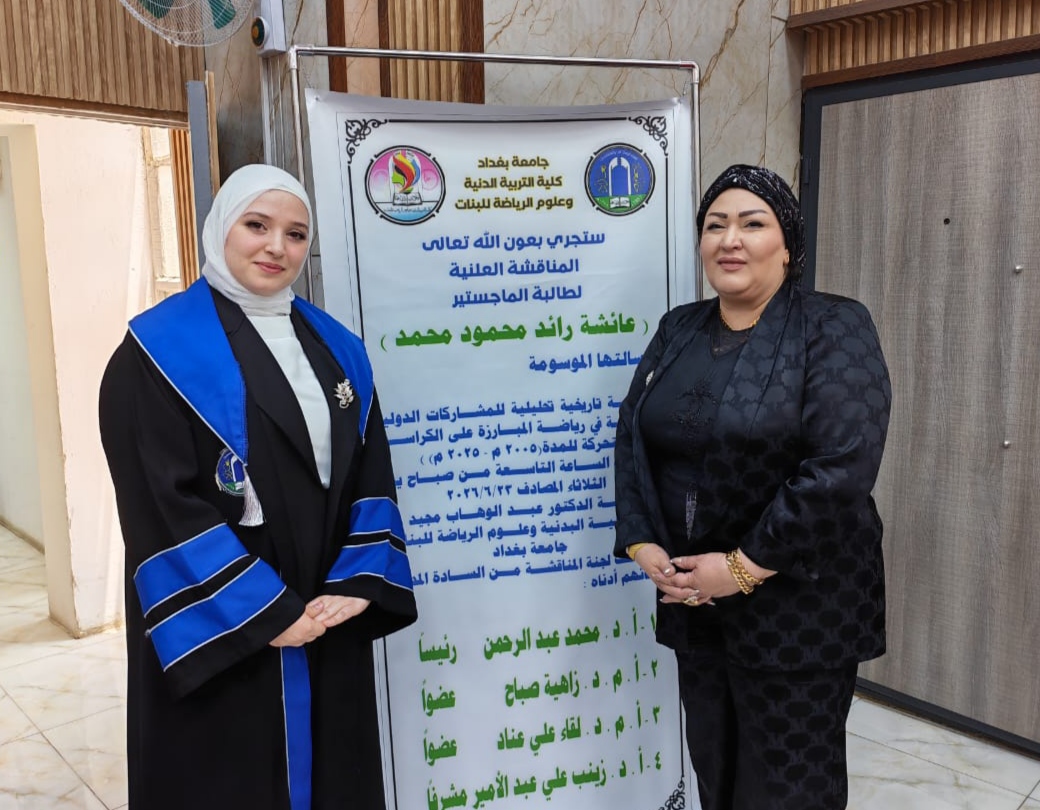
The College of Physical Education and Sports Sciences for Girls at the University of Baghdad discussed a Master’s thesis titled “A Historical and Analytical Study of Iraqi International Participation in Wheelchair Fencing (2005–2025)”, submitted by the researcher Aisha Raid Mahmoud.
The study aimed to analyze the nature of Iraqi international participation in wheelchair fencing from 2005 to 2025, while determining the volume and chronological sequence of this participation, categorized by tournament type, including Asian, World, and Paralympic championships throughout the studied period. Additionally, it sought to document and analyze the international achievements attained by Iraqi wheelchair fencers, alongside identifying the prominent technical, administrative, and organizational challenges encountered by this sport in Iraq during the same duration.
Regarding the conclusions, the study revealed a fluctuation in Iraqi international participation, which was limited between 2005 and 2010, expanded relatively from 2011 to 2016, and witnessed a significant increase in both participation rates and outcomes from 2017 to 2025. Individual achievements dominated among Iraqi fencers, particularly during the 2011–2016 period, followed by a gradual improvement in team performance from 2017 to 2025, which reflects a relative shift in competitive outcomes. Furthermore, the competitive base for both individual and team achievements remained stable due to the continuous reliance on the same core group of elite athletes, thereby contributing to an accumulation of competitive experience. The findings also indicated that achievements were predominantly prominent in the Épée event, reflecting a specialized training orientation toward this specific weapon.
Based on these findings, the researcher recommended leveraging the historical timeline of performance development when formulating future strategic plans to address shortcomings and reinforce positive outcomes. The recommendations also emphasized developing specialized team-preparation training programs to balance individual and team achievements, alongside providing increased support and broadening the roster of athletes participating internationally to reduce reliance on a limited number of fencers. Moreover, the researcher stressed the importance of maintaining continuous preparation for elite athletes, directing training efforts toward enhancing performance across other fencing weapons rather than limiting focus exclusively to the Épée, and adopting long-term planning frameworks grounded in the analysis of international participation to foster higher levels of achievement.
Finally, this study directly aligns with the fourth goal of the United Nations Sustainable Development Goals, which represents Quality Education.
The College of Physical Education and Sports Sciences for Girls at the University of Baghdad discussed a Master’s thesis titled “A Historical and Analytical Study of Iraqi International Participation in Wheelchair Fencing (2005–2025)”, submitted by the researcher Aisha Raid Mahmoud.
The study aimed to analyze the nature of Iraqi international participation in wheelchair fencing from 2005 to 2025, while determining the volume and chronological sequence of this participation, categorized by tournament type, including Asian, World, and Paralympic championships throughout the studied period. Additionally, it sought to document and analyze the international achievements attained by Iraqi wheelchair fencers, alongside identifying the prominent technical, administrative, and organizational challenges encountered by this sport in Iraq during the same duration.
Regarding the conclusions, the study revealed a fluctuation in Iraqi international participation, which was limited between 2005 and 2010, expanded relatively from 2011 to 2016, and witnessed a significant increase in both participation rates and outcomes from 2017 to 2025. Individual achievements dominated among Iraqi fencers, particularly during the 2011–2016 period, followed by a gradual improvement in team performance from 2017 to 2025, which reflects a relative shift in competitive outcomes. Furthermore, the competitive base for both individual and team achievements remained stable due to the continuous reliance on the same core group of elite athletes, thereby contributing to an accumulation of competitive experience. The findings also indicated that achievements were predominantly prominent in the Épée event, reflecting a specialized training orientation toward this specific weapon.
Based on these findings, the researcher recommended leveraging the historical timeline of performance development when formulating future strategic plans to address shortcomings and reinforce positive outcomes. The recommendations also emphasized developing specialized team-preparation training programs to balance individual and team achievements, alongside providing increased support and broadening the roster of athletes participating internationally to reduce reliance on a limited number of fencers. Moreover, the researcher stressed the importance of maintaining continuous preparation for elite athletes, directing training efforts toward enhancing performance across other fencing weapons rather than limiting focus exclusively to the Épée, and adopting long-term planning frameworks grounded in the analysis of international participation to foster higher levels of achievement.
Finally, this study directly aligns with the fourth goal of the United Nations Sustainable Development Goals, which represents Quality Education.